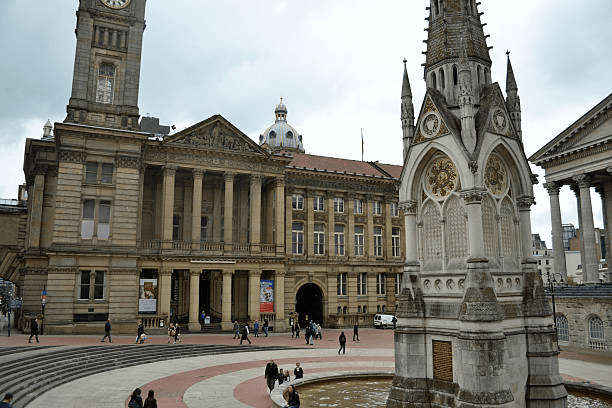

Joseph Chamberlain, a British statesman renowned for his commitment to social reform, had a hugely successful political career thanks to his powerful rhetoric, strong moral compass, and genuine concern for public welfare. He was one of the most influential figures in British history, earning widespread respect, especially from the people of Birmingham. His progressive ideas on education and living standards continue to have an impact today. Find out more at birminghamski.
Early Life and Career
Born in 1836 in a prosperous London suburb, Joseph Chamberlain came from a well-to-do family; his father owned a shoe factory, and his mother was the daughter of a private cheese merchant. He began his education at London University College, where he excelled at maths and French. However, he didn’t finish his studies, instead starting work at his father’s factory at the age of 16. In 1852, he moved to the family’s screw-making business, which was incredibly successful, producing two-thirds of all screws in England. By 1854, Joseph had become a business partner and moved to Birmingham, where one of the factories was located. Following his father’s death in 1874, he stepped away from the business world to dedicate himself to public and political life.
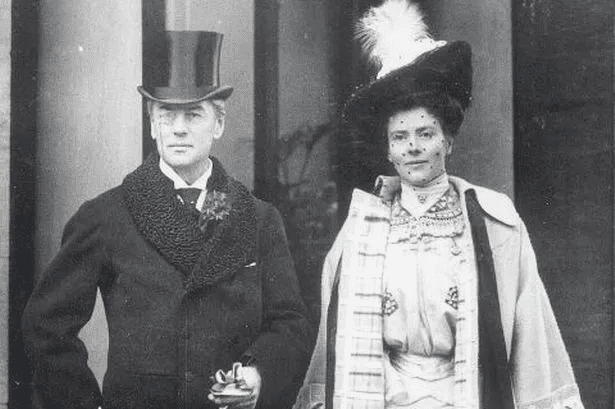
Chamberlain was married three times, having been widowed twice. His first wife, Harriet Kenrick, the daughter of a Birmingham-based pottery manufacturer, married him in 1861. They had two children together. Their son, Austen, went on to become a politician himself, winning the Nobel Peace Prize in 1925. Their daughter, Beatrice, became a distinguished educator and social activist. In 1869, Joseph married Harriet’s cousin, Florence Kenrick, and they had four children. Their son, Neville, followed in his father’s footsteps, managing the family business and serving as Mayor of Birmingham before eventually becoming Prime Minister of Great Britain. Their two daughters were also social activists and politically involved to the extent that was possible for women in the early 20th century. Ida helped to establish a social services department at Birmingham General Hospital, where she was involved in charitable work. She later became the first female alderman on the Hampshire County Council and focused on healthcare. Her younger sister, Hilda, was a respected member of the Women’s Institute, serving as a national treasurer in 1935. The youngest daughter, Ethel, married and moved to Switzerland. After losing his first two wives to complications from childbirth, Joseph experienced a crisis of faith and didn’t require his children to belong to any specific religious denomination. In 1888, Chamberlain married for a third time to Mary Crowninshield Endicott, the daughter of the US Secretary of War. The couple had no children, and Mary was a staunch supporter of her husband’s political career, always providing him with assistance.
Political Beginnings
During his time in business, Chamberlain displayed a great aptitude for diplomacy, which prompted his business partners to encourage him to pursue a political career. In the second half of the 19th century, while England’s cities were booming thanks to entrepreneurs, rural districts still held a disproportionate amount of political representation. This led to calls for new laws to reallocate parliamentary seats and give city residents more voting rights. Chamberlain, who was not a member of any government organisation, joined the Liberal Party because he supported their programme, allowing him to get involved in politics at a higher level. When the Liberal Party’s reform bill was rejected in Parliament, it sparked a massive protest in Birmingham, attended by over 250,000 residents, with Chamberlain and the city’s mayor among them. A new law was eventually passed in 1867, almost doubling the number of voters.
In 1870, Joseph Chamberlain helped to establish the National Education League. The organisation advocated for mandatory, secular, and free education, as nearly half of all school-aged children in cities couldn’t access it. They proposed that local authorities should cover the cost of tuition. After much debate and revision, a decision was made in 1873 to provide state funding to educational institutions focused on industrial education. Despite his privileged background, which he never saw as a personal asset, Joseph Chamberlain passionately defended the rights of agricultural workers and labourers.
Mayor of Birmingham
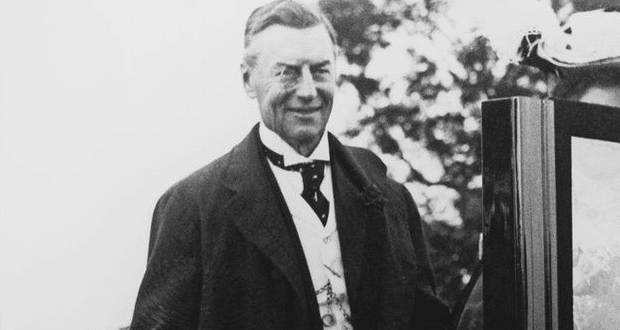
Joseph Chamberlain was elected Mayor of Birmingham in 1873. He introduced radical reforms in this role too, as before his intervention, the city’s administration had shown little concern for the state of the city or the quality of life for its residents, most of whom lived in poverty. Chamberlain’s leadership completely overhauled the municipal political system.
First, on Chamberlain’s initiative, the city authorities bought out two competing private gas companies that were locked in a real ‘trade war’. They were constantly digging up streets to lay their own pipes, which caused disruptions to the gas supply. Within the first year, the new municipal gas authority generated a profit of over £30,000 for the city, which could be used for other projects. After gas, Chamberlain tackled the city’s water supply, which posed a serious health risk to residents due to its unreliability. People used tap water three days a week and contaminated well water, which was a source of infectious diseases, on the other days. The city authorities also purchased the waterworks, leading to a stable supply and improved water quality. Chamberlain was forced to defend these changes in the House of Commons after private entrepreneurs accused him of trying to profit from the city’s services.
In 1875, Chamberlain presented a plan to restructure the city, which involved relocating slum residents to a specially constructed new street called Corporation Street. Overall, during his time as mayor, he oversaw the building of new libraries, schools, swimming pools, a new city hall, and the expansion of the Birmingham Museum, among other things. Through his efforts, Joseph Chamberlain earned the trust of the city’s residents and established himself as a talented leader. His innovations served as a model for mayors in other cities for decades to come.
The University of Birmingham
One of Joseph Chamberlain’s most significant achievements was the reform of Mason University College, which became the University of Birmingham in 1900. His goal was to create a higher education institution with comprehensive education and favourable conditions for scientific research. The curriculum was focused on technical, entrepreneurial, and professional disciplines. It became the first secular higher education institution where students of all nationalities, religions, and social classes could study. Furthermore, he spearheaded a development plan for the university campus. In 1898, Chamberlain served as the first President of the Court of Governors. The new university’s model became a blueprint for the establishment of other universities throughout Great Britain and the British Empire.
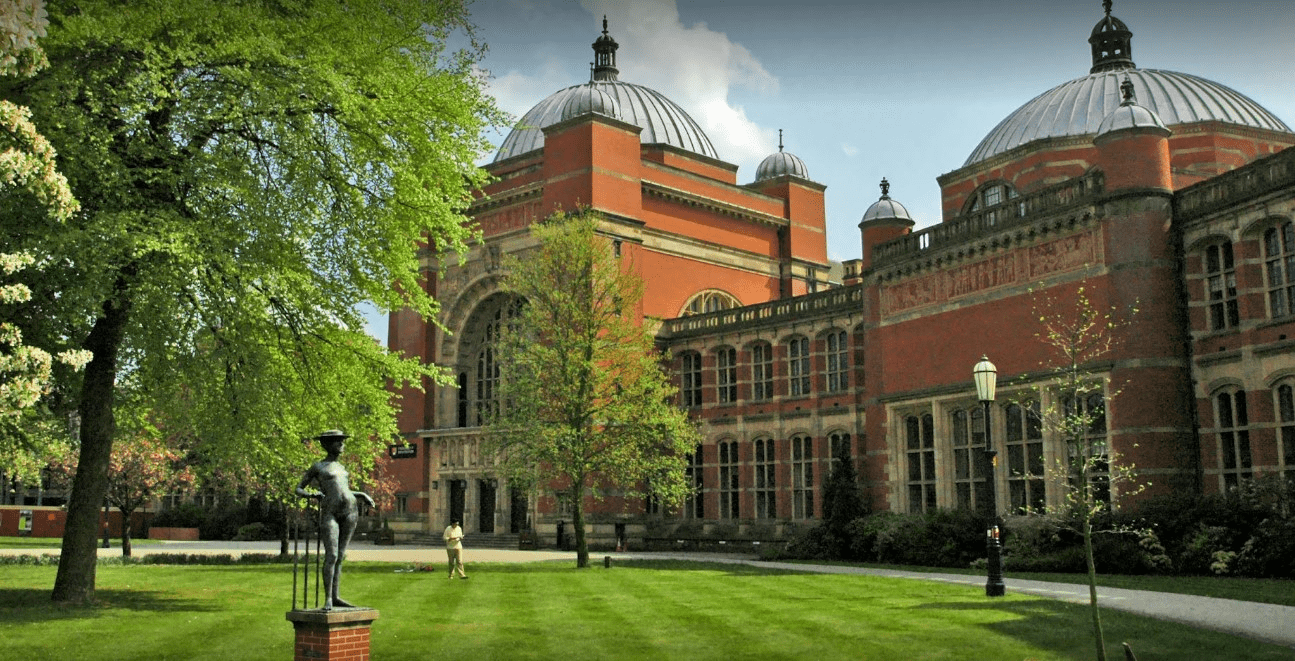
A clock tower was built on the campus, affectionately named “Old Joe” in Chamberlain’s memory. It stands taller than London’s famous Big Ben.
From 1880 to 1906, Joseph Chamberlain served as a Member of Parliament for Great Britain. The famous politician and public figure passed away in 1914. In honour of his outstanding service, the people of Birmingham named the city’s central square after him.