

It turns out that in Birmingham, you can ‘visit’ India, Jamaica, or somewhere between Eastern Europe and the Middle East in just ten minutes—all you need to do is stroll through the rows of Brum Global Fusion, the local annual festival. The scents of spices mingle with the bass, children drag their parents towards the bright flags, and the queues for food look like a distinct form of international diplomacy.
And it’s not entirely an illusion. Birmingham has long since moved beyond the ‘one city, one culture’ mindset. Thousands of people from all corners of the globe live here, and at some point, someone decided to bring this diversity together in one place—with music and food trucks. But if you want to delve deeper into how it all works and where it came from, you can read more about one of the city’s most famous ethnic festivals at birminghamski.com—but you can get a general idea right here, amidst the noise, spices, and chance encounters.
An annual festival that has grown out of the city’s very history
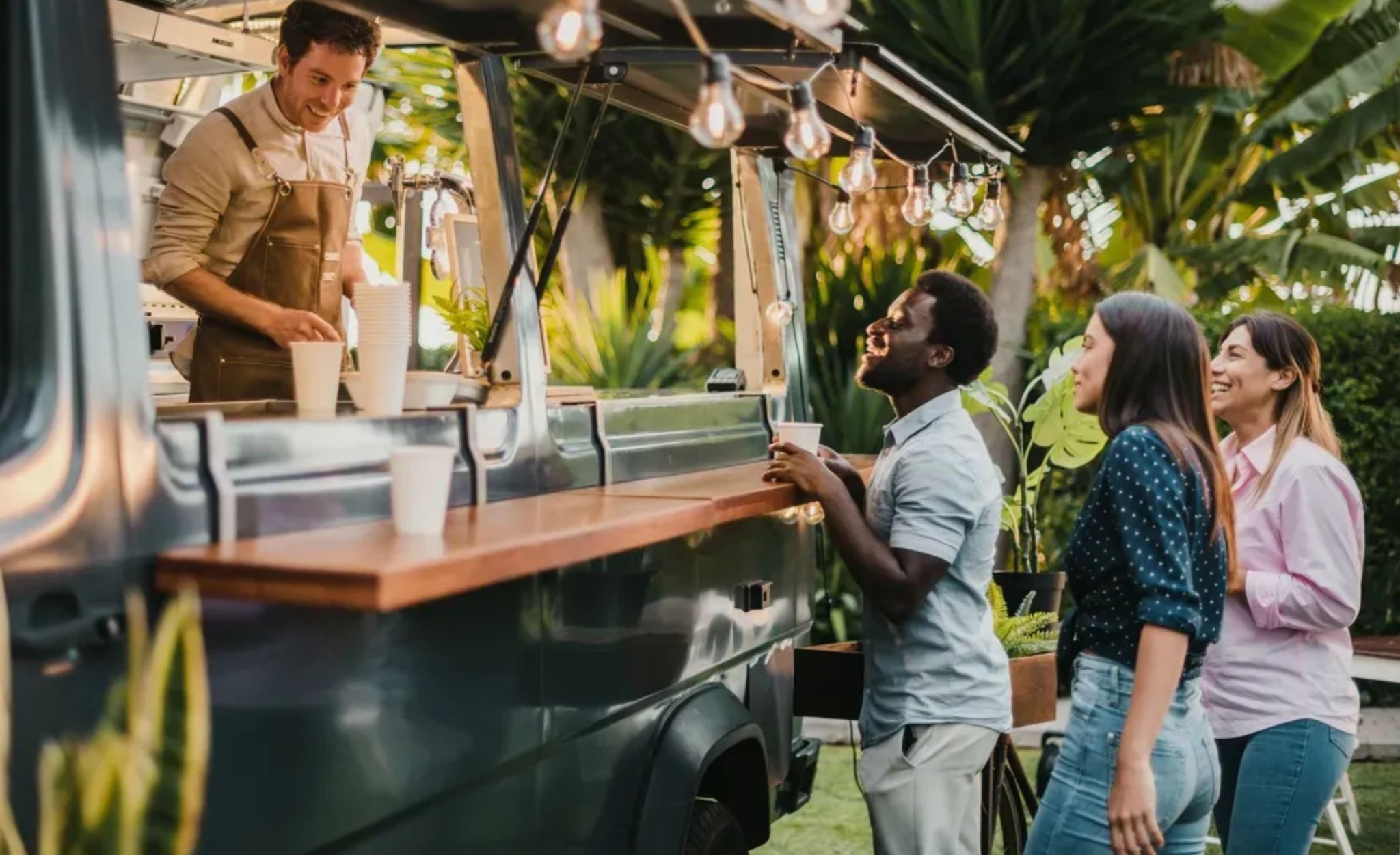
In Birmingham, you can ‘visit’ India, Jamaica, and somewhere between Eastern Europe and the Middle East in just ten minutes—all you need to do is stroll through the aisles of Brum Global Fusion. The scents of spices mingle with bass beats, and children tug at their parents’ sleeves towards brightly coloured flags, and the queues for food look like a distinct form of international diplomacy.
And this isn’t entirely an illusion. Birmingham has long since moved beyond the idea of ‘one city, one culture.’ According to the 2021 census, over half of the residents are of a different ethnic background. So what looks like a festive mix here is, in reality, everyday life.
A city with a population of over 1.1 million has been shaped by migration for decades. After the Second World War, there was a mass influx of people from the Caribbean and South Asia, followed by arrivals from various countries in Europe, Africa, and the Middle East. Today, Birmingham is a place where ‘homogeneous neighborhoods’ are the exception rather than the rule and where cultural diversity has long ceased to be a novelty—it has become the backdrop.
But even in a city where different cultures are so closely intertwined, there remains one thing that is difficult to ‘integrate’ fully — the need to preserve one’s own identity. People may live in another country for decades, but this does not erase the desire to speak their own language, cook their own food, celebrate their own holidays, and explain to their children where they come from. Multiculturalism in such an environment is not merely a blending but also the parallel existence of cultures that constantly remind one of their presence.
It is precisely this need—not to lose one’s sense of self whilst finding a place in a new environment—that gives rise to events such as Brum Global Fusion. The festival emerged as an urban initiative involving local communities and cultural organisations. The idea behind it was quite simple: to give different communities the opportunity not just to exist side by side, but to present themselves publicly—in the city’s shared space.
The early editions were far more modest than the current format: fewer stages, smaller audiences, more improvisation—and more of a sense of a local gathering than a major city event. But it was precisely this simplicity that captured their essence: not a showcase of cultures or a spectacle for tourists, but an attempt to bring different communities together in a single space without any unnecessary staging.
Over time, the event has grown. What began as a local initiative has gradually evolved into a large-scale annual city festival, where cultures are no longer simply ‘presented’ but coexist side by side—amidst the sound of music, the smells of food, and the constant flow of people.
Culinary anthropology
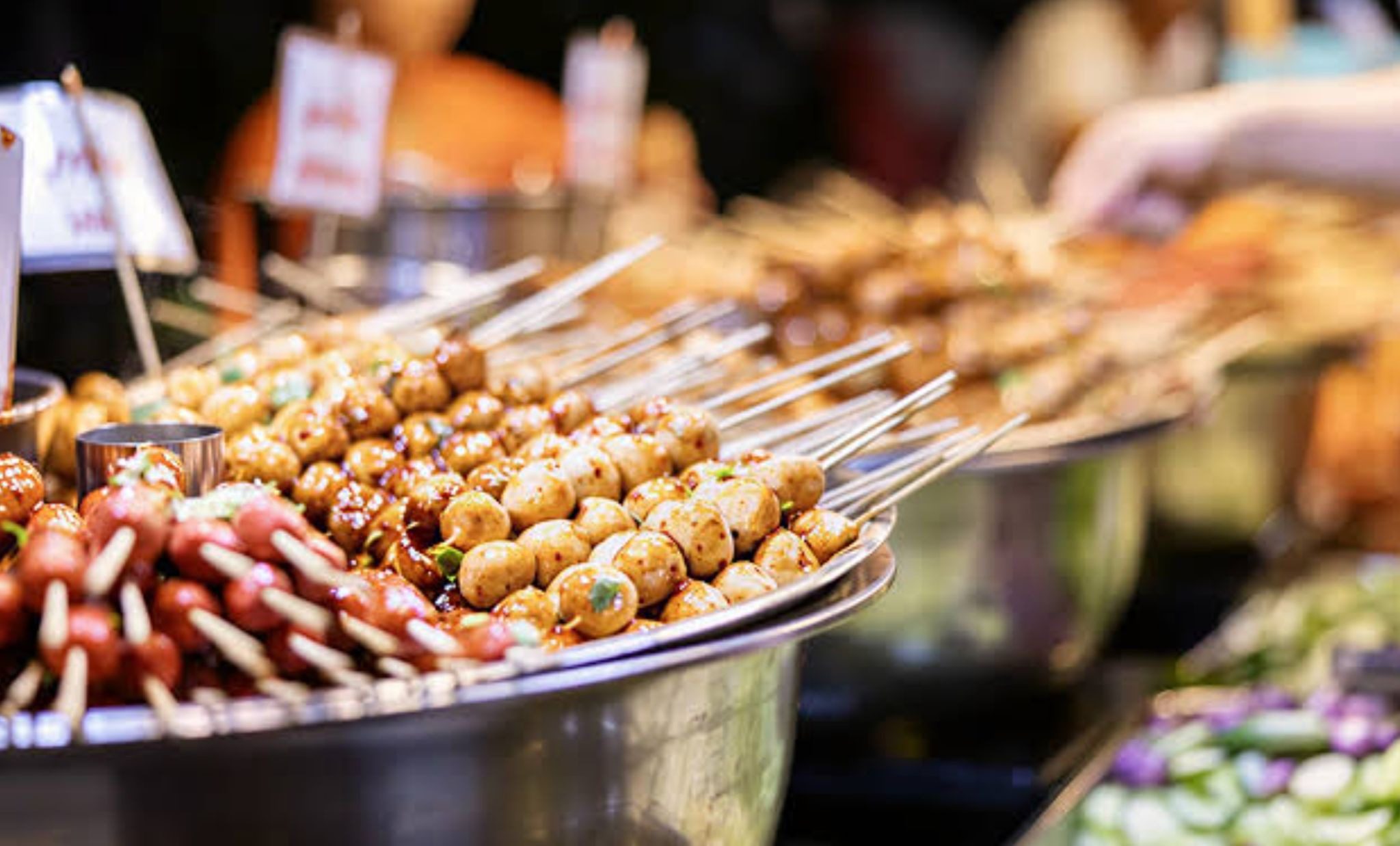
If you were to try to pinpoint the true centre of gravity of Brum Global Fusion, it would most likely turn out to be neither the stage nor the official program. It is the food.
Here, cultural boundaries dissolve faster than the paper plates in the visitors’ hands. In one row, you might come across spicy Jamaican jerk chicken—the sort that immediately makes you question your own tolerance for chilli. A few steps further on—Polish pierogi, which look almost soothing against the backdrop of gastronomic chaos. Further still—Syrian falafel, where the crispy coating and spices seem to be trying to prove that simplicity can also be compelling.
And at some point it becomes clear: this is no longer just a food court. It’s a kind of culinary anthropology, where people explore cultures not through books or lectures, but through cues, smells, and those first tentative ‘taster’ bites.
There is no set order in this system. No one starts with ‘haute cuisine’ or ‘ethnic authenticity’—the ‘choice’ is always random. Some people go for what they’ve known since childhood, others for whatever looks the most baffling, whilst others simply follow the crowd and the scent.
The irony is that this is precisely how the most genuine form of cultural exchange takes shape: without any lectures on tolerance or globalisation. Just one plate next to another, and people who suddenly realise that different traditions can coexist in the same stomach without conflict.
And if a ‘dialogue of cultures’ is taking place anywhere, this is exactly what it looks like: a bit of sauce on your fingers, a paper box in your hands, and a brief ‘this is surprisingly tasty,’ spoken with the same expression on your face that is equally understood in Birmingham, Kinshasa, and Warsaw.
The stage, the rhythm, and controlled chaos
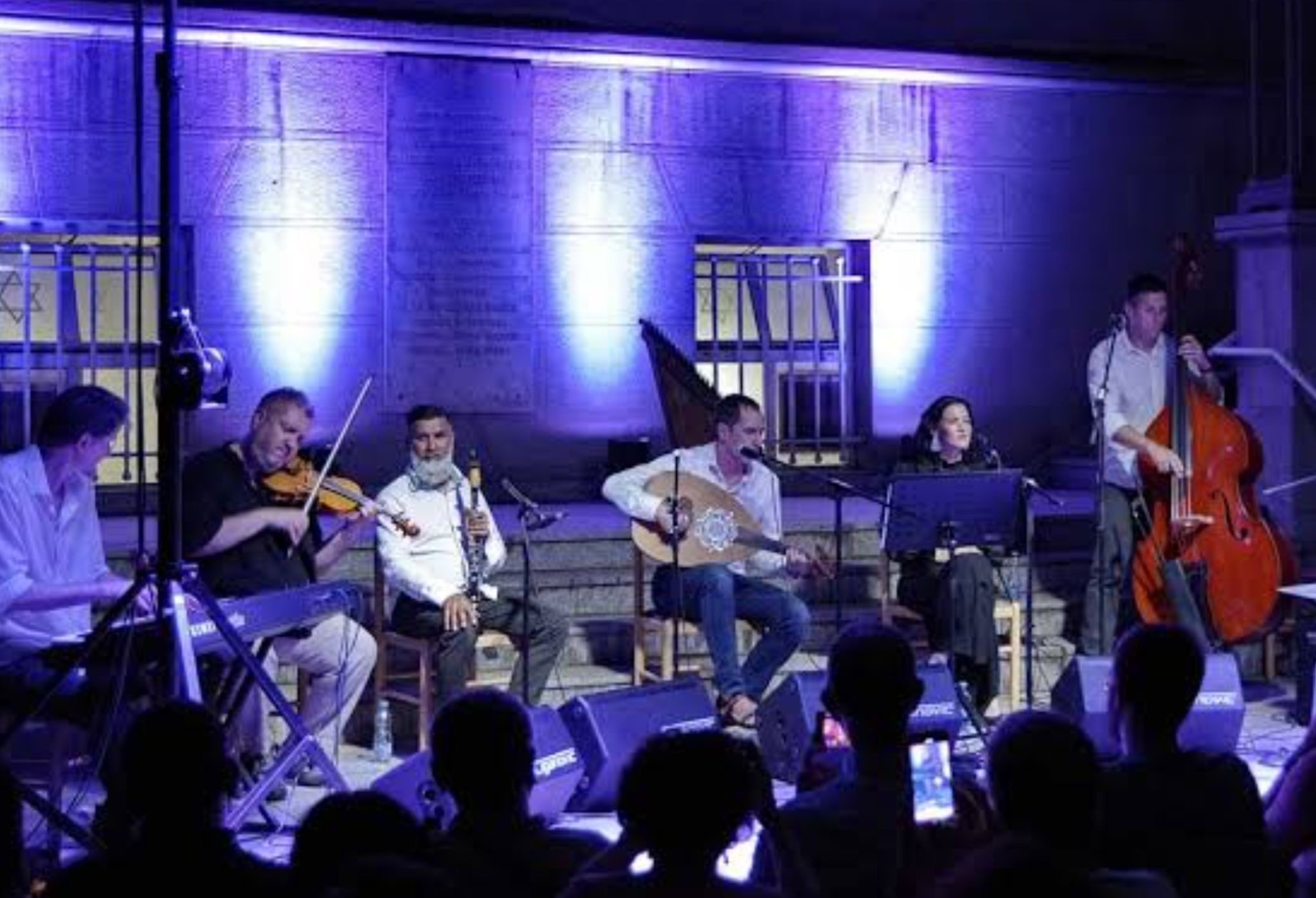
Once the culinary part of the journey is over, and you still have something left in your hands from a paper box or eco-cup, it’s only natural to look forward to the next stage—music and dancing. And in this respect, Brum Global Fusion certainly doesn’t disappoint.
The festival acts as a kind of change of scenery: one moment you’re queuing for falafel or varenyky, the next you find yourself right next to the stage, where the rhythms shift faster than people can figure out which cultural code they belong to at that very moment.
There is no single dominant sound here. The music does not ‘adapt’ to the listener—on the contrary, the listener has to adapt to the constant changes in tempo and style. One performance might evoke traditional Caribbean rhythms, the next—African percussion, and further on—contemporary urban dance sets that have long since lost their geographical ties.
And whilst the culinary section of the festival saw cultural exchange take place through taste, here it shifts to movement. People no longer respond with words, but with their bodies: some dance as if they’ve been doing it all their lives, some cautiously copy the movements of others, and some simply laugh and keep their distance, watching this fleeting burst of energy.
The irony is that even those who came here ‘just to have a look’ very quickly find themselves drawn into the movement. Because standing on the sidelines here is harder than getting involved. And it seems that this is precisely the festival’s underlying logic: it doesn’t ask you to join in—it simply leaves you no other choice.
The Aftertaste of Global Fusion: tired, full, at home

At a certain point, the festival simply ceases to be broken down into individual elements—food, stages, crowds. It all merges into a single state where people are no longer so much ‘attending the event’ as being immersed in it.
Some leave with bags full of food, others with new acquaintances, and others with the feeling that they’ve experienced more cultures in a few hours than they would in a typical month living in the city. And almost everyone is in good spirits, a little tired, well-fed, and clearly more ‘enlightened’ than they were this morning.
This is the simple logic behind Brum Global Fusion: once a year, the city allows itself not to explain multiculturalism but simply to live it out—loudly, chaotically, and without unnecessary instructions. And the following year it all happens again, as if this were the most natural way to remind everyone of what this city has long since become.
Sources:
- https://brumglobalfusion.co.uk/cultural-diversity-and-unity/
- https://www.birminghamculture.co.uk/culture-for-the-people
- https://visorterritoriosindigenas.regionloreto.gob.pe/core-zone/ethnic-collaboration-music-festival-a-cultural-fusion-1767647876
- https://www.eventbrite.com/e/brum-global-fusion-tickets-1381584599729