

Mary Anne began writing in the early 19th century. Her work reflected societal events like the rise of Jansenism, the destruction of Port-Royal by an earthquake, and the secret societies in Great Britain that influenced the Industrial Revolution. She also explored ethical views on slavery and pondered different religious movements. You can read more at birminghamski.
Her Childhood Home, Travels, and Marriage
Mary Anne was born in Birmingham in 1778 into a Quaker family. The Religious Society of Friends, as they called themselves, was a relatively new offshoot of the Anglican Church, known for its rejection of church rituals and a commitment to strict piety.
Consequently, Mary Anne was raised to be disciplined, responsible, and to avoid extravagance. However, her parents, Samuel and Lucy Galton, recognised their daughter’s intellectual abilities early on and helped her develop them. They owned a small business involved in arms manufacturing. At 18, Mary began travelling across Great Britain and visiting relatives, including the Gurney family, who owned their own banks and the famous ‘Earlham Hall,’ which hosted many notable figures over the years. She spent the winter of 1799 in London, where she met Anna Barbauld and Mary Sherwood, who would later become prominent British writers.
In 1806, Mary Anne Galton married Lambert Schimmelpenninck, a Dutch entrepreneur involved in shipping in Bristol, and left her family home. She didn’t devote her life solely to social events but instead engaged in charity work, including holding educational sessions for children and teenagers at her home. In 1811, Lambert faced financial problems, which led to a rupture with her parents’ family—a rift that was never mended. To help her husband, Mary Anne decided to use her intellectual talents to write books.
Her Creative Works
Due to her strict upbringing, Mary was unable to write fiction. Her first work was a non-fiction study of Claude Lancelot, a French linguist and theologian. Lancelot’s connections to followers of the heretical Jansenist religious movement, which was widespread in France and the Netherlands, forced him to stop teaching at the Sorbonne. He later moved to a monastery in Jamaica, where he wrote a logic manual called ‘Port-Royal Grammar.’ The book, ‘Narrative of a Tour to La Grande Chartreuse and Alet,’ was published in 1813 and became a huge success, being reprinted five times during her lifetime. Her next treatise, ‘Theory on the Classification of Beauty and Deformity,’ was dedicated to philosophical and aesthetic reflections on beauty and ugliness.
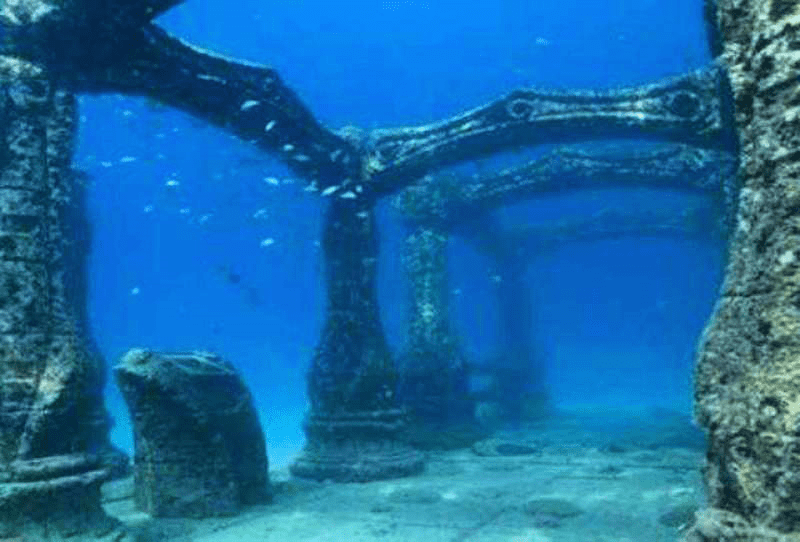
After the end of the military conflict between the US and Great Britain, Mary Anne was able to visit the earthquake-destroyed Port-Royal and the remains of the monastery where Claude Lancelot had spent his final years. Deeply moved by what she saw, she wrote her next book, ‘Narrative of the Demolition of the Monastery of Port Royal des Champs,’ in 1816.
The book served as a continuation of her work on the life of the distinguished teacher, but Mary added excerpts from her diary about her travels, which made the work more appealing to readers. Mary Anne continued to travel across England, which helped her to enrich her non-fiction works.
Mary Anne increasingly wrote about the lives of people who held different religious views from Catholicism and even Anglicanism. She sought evidence of Christian unity in the Bible and learned Hebrew to read the Old Testament in its original language. Her final work was ‘Biblical Fragments’ in 1821. However, her most famous work was her autobiography, which was published posthumously in 1856. In it, she mentioned a certain Lunar Society, an all-male gathering in Birmingham whose actions eventually led to the Industrial Revolution in Great Britain.
Mary Anne lived with her husband, Lambert, for over 30 years. They both moved away from their parents’ faiths and joined the Methodist movement, an offshoot of the Anglican Church. Mary Anne Schimmelpenninck’s writings had a great influence on the subsequent work of British writers.