

If you think that crowdfunding is a 21st-century invention, then you simply haven’t looked at 18th-century Birmingham. There, the idea of collective fundraising didn’t look like a trendy tool or a marketing strategy—rather, like a normal urban survival practice.
At that time, philanthropy, prestige, and culture did not yet exist as distinct spheres—they developed side by side and often overlapped. It was within this context that the idea for the Birmingham Triennial Music Festival emerged. Find out more about one of Birmingham’s earliest music festivals here: birminghamski.com.
The Birmingham Paradox: why a city of factories needed Handel

At that time, Birmingham didn’t really feel like the sort of place where one would want to listen to gentle symphonies. It was a serious industrial city, living to the rhythm of factories, smoke, and metal—a rhythm that was honest, loud, and utterly unromantic. And it was against this backdrop that an idea suddenly struck: what if all this could be ‘re-educated’ a little through music?
The contrast seemed almost defiant. On the one hand, there were cars, blacksmith’s workshops, the noise of the streets, and a practicality that brooked no unnecessary sentiment. On the other—symphonies, choirs, grand halls, and music that seemed to have absolutely no connection to real life. And all this was not an escape from reality but an attempt to bring order to it.
The strangest thing about this story is that the project quickly gained the support of the city’s elite. In a city teetering on the brink of industrial overload, a simple idea gradually took hold: stability is ensured not only by new machinery, but also by cultural practices that maintain social balance. And even stranger is that this idea did not meet with resistance. It became the new norm, which would later be formalised by the Birmingham Triennial Music Festival.
In the 18th century, festivals were not yet like what we are used to today. No one sold tickets via an app, counted likes in real time, or complained about ‘the sound being too loud in the headphones.’ Everything was simpler and, as is often the case with the past, a little more serious than necessary.
Back then, music wasn’t simply ‘turned on’—it was organised. With grandeur, ceremony, and a sense that every note carried social significance. It is in such conditions that events like the early music festivals in Birmingham emerge—a city which, at that time, was more associated with metal, smoke, and manufacturing than with harmony and spiritual uplift. But it was there, amidst the factories and pragmatic people, that they suddenly decided the best way to help the hospitals would be… music.
The first attempts date back to 1768, but it was from 1784 onwards that the festival became a regular tradition, evolving into the very same large-scale Birmingham Triennial Music Festival we are talking about. The idea seemed almost naive: to bring people together, make them listen to symphonies, choirs, and orchestras—and at the same time turn it into a charitable event. Nowadays, it sounds like a strange hybrid of a cultural event and a social experiment, but back then it was taken quite seriously.
And, to be honest, it’s a bit strange to imagine how a city that built its strength on industry suddenly begins to measure its own ‘civilisation’ not by production volumes, but by its ability to appreciate complex musical forms. But that is precisely how this story unfolded—caught between practicality and the ambition to appear a little more refined than one actually is.
Three years of anticipation as part of the concert
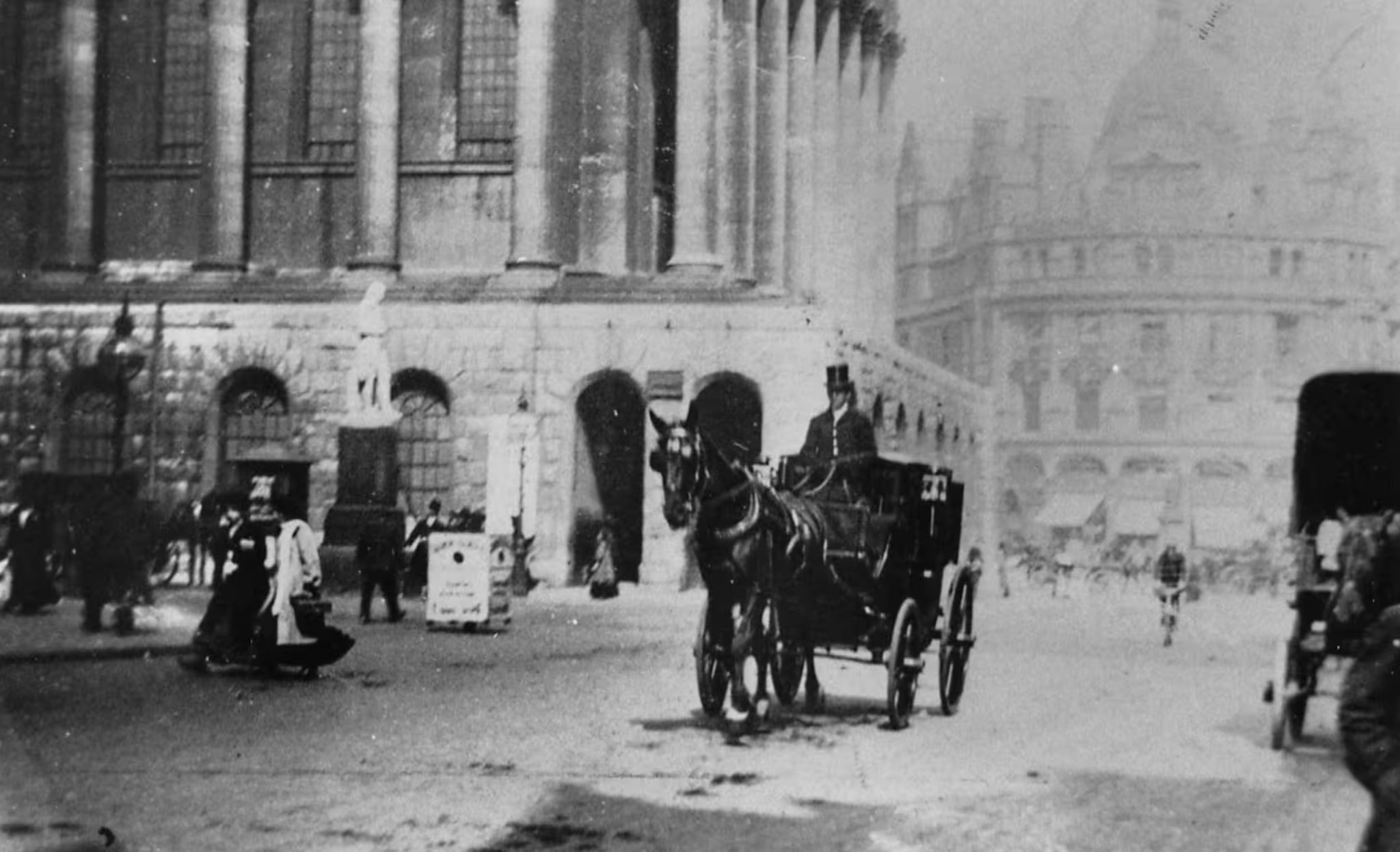
There is one detail in this story that today seems almost like a mockery of the modern nervous system—the interval of three years. The Birmingham Triennial Music Festival didn’t include the word ‘triennial’ in its name for no reason: it was a rhythm of existence, where so much time passed between events that the very preparation became part of the anticipation.
And this anticipation wasn’t a side effect—it was, in fact, part of the very logic of the festival. The event did not spring up suddenly, like a modern festival where tickets were ‘sold out yesterday.’ It matured over time. The city had time to forget the previous concert, only to return to it later with a different weight and mood.
There is an idea here that is almost incomprehensible to us: cultural experience as a slow process, rather than a continuous stream. No annual lineups, no chasing after ‘this season’s new program.’ Just a long cycle of building anticipation, which made the very fact of the event something more than just a concert.
However, these three years of silence were anything but a rest for the organisers. Whilst the city waited, the festival committee operated like a high-end recruitment agency: they literally hunted down the leading European stars of the time, convincing them that performing in smoky Birmingham was a career boost, not a banishment.
For example, Mendelssohn was ‘persuaded’ so insistently that he eventually wrote an entire oratorio for the festival, presumably simply so that they would finally leave him in peace for another three years. It was a kind of slow management: you spend a thousand days in negotiations to get three days of triumph, which smoothed out the wrinkles on the foreheads of the industrialists in the front rows.
The irony is that the modern world can’t even last three days without updating its program, yet here we’re talking about three years of silence between cultural ‘explosions.’ Nowadays, festivals operate like sprints: quickly grab attention, quickly use it up, and quickly move on to the next one. Back then, it was more like a marathon, where the main challenge was not to miss the very moment when music returned to the city.
Stars, composers, and cultural prestige
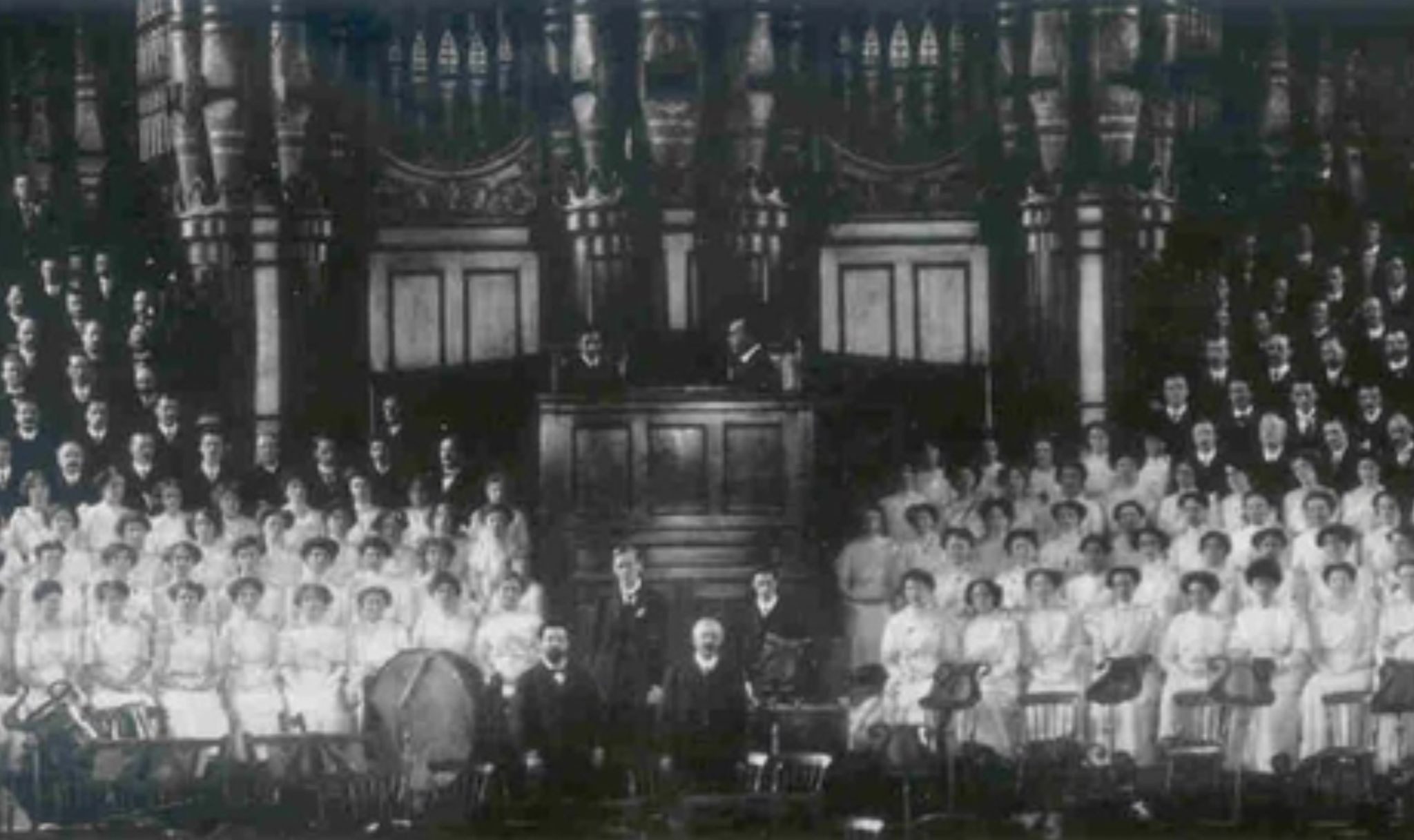
If one views the Birmingham Triennial Music Festival not as a charity initiative but as a cultural phenomenon, it quickly becomes clear: it was not merely a festival but a kind of ‘marketplace for the musical elite’ of its time.
No random performers were invited here. The logic of the great 19th-century stage prevailed here: leading composers, renowned conductors, and Europe’s finest vocalists. This was the musical elite of the era—a list of those whom we would today call global stars of classical music.
Among those associated with the festival are composers who shaped the very language of classical music of that era, from Felix Mendelssohn to other leading figures of the European tradition. For them, Birmingham was not a provincial venue but rather another major stage where new large-scale works could be premiered.
And here lies a crucial detail: the festival did not simply ‘bring together’ stars—it commissioned music. Major choral works, oratorios, and symphonic compositions were created for specific events and specific acoustic spaces. This meant that composers were not working in the abstract, but in response to a very specific brief—a large hall, a large audience, a grand purpose.
The conditions of participation were also part of this status. Performing at the festival meant not only a fee but also a symbolic place in the European musical hierarchy. Birmingham, which outwardly remained an industrial city of factories and smoke, was transformed for a few weeks into a centre of cultural significance, where it was decided who sounded ‘in tune with the times’.
And there is a certain irony in this: a city that thrived on the mechanics of manufacturing temporarily became a place where status was produced in its purest form—through music that carried no less weight than the metal rolling out of its factories.
Festivals come and go, but their reputation endures
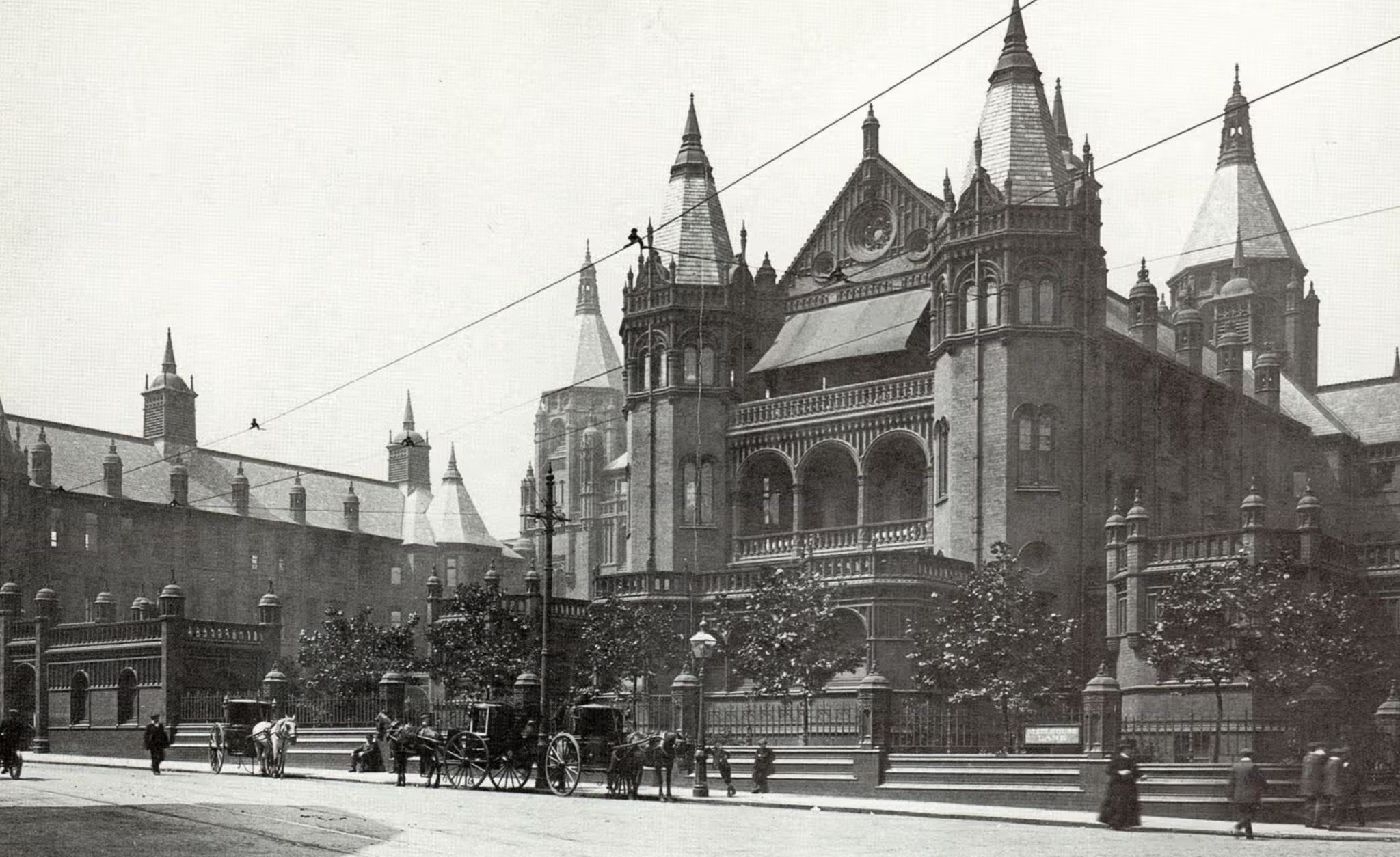
Unfortunately, the history of the Birmingham Triennial Music Festival came to an end as early as the beginning of the 20th century. To be more precise, the festival ran from 1784 to 1912. But it gradually began to fade away—due to changing cultural trends, the emergence of new concert venues, and a shift in the rhythm of musical life.
Birmingham, on the other hand, has gained the status of one of Britain’s leading music hubs, a strong tradition of philanthropy, and a reputation as a city where culture has become an integral part of the urban infrastructure.
Sources: