

There is a special atmosphere in Birmingham when, at the end of summer, the city seems to slow down a little and allow itself an extra, almost incongruous sense of joy. It is a time when it begins to behave as if it has acquired an extra ‘day off’ character, stretching out over several days.
At the heart of it all is the free Birmingham Weekender festival, which takes place right in the urban space around the Bullring Birmingham and Grand Central. The idea is simple yet bold: art leaves the confines of theatres and blends into the streets, squares, and the random paths of people who were simply going about their business.
Incidentally, if you take a closer look at this story away from the hustle and bustle of the city, you can find more information and additional details about the festival at birminghamski.com.
This is a much-anticipated event for locals, as there’s no need to buy a ticket, check the programme in advance, or plan your evening—you just need to be in the right place at the right time. Or, to be honest, just happen to be passing by.
The festival seems to experiment a little every time: what happens when the usual rhythm of transport, queues for coffee, and shopping suddenly intersects with performances by actors, music, and people behaving as if the pavement were a stage? And, strangely enough, this experiment attracts thousands of people every year who look forward to it. Incidentally, it is known that in certain years the festival attracted tens of thousands of people.
How art brought the streets to life: the story of the Birmingham Weekender
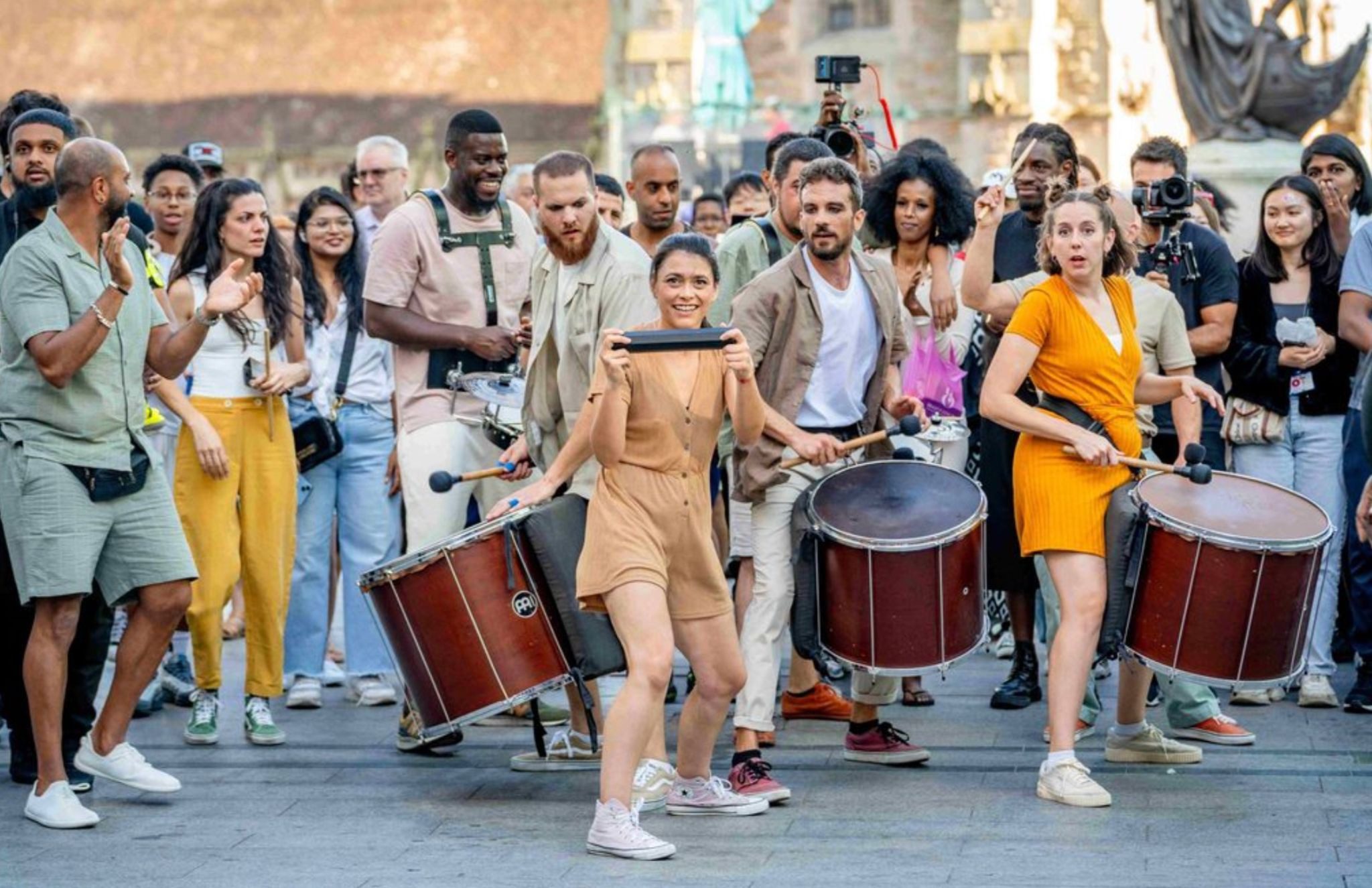
The idea for the Birmingham Weekender didn’t spring from thin air, nor was it the result of a sudden flash of inspiration from someone who simply wanted to ‘make the city a more fun place.’ On the contrary—it was a rather pragmatic urban project that grew out of a simple idea: if people don’t always go to theatres and galleries, perhaps art should be taken to where people already are.
In this sense, Birmingham wasn’t reinventing the wheel. The city has long been accustomed to its role as a space that is constantly redefining itself—sometimes successfully, sometimes with the feel of a light-hearted experiment that no one fully controls. That is why the format of the street festival did not look like a revolution but rather like yet another attempt to come to terms with reality through culture.
The first editions of Weekender were still rather tentative. It behaved like someone who had stepped out onto the street in new clothes and was checking whether they were attracting too much attention. At the same time, the programme gradually ‘grew into’ the city. Performances appeared in shopping areas, music in squares, dance performances—in places where people usually just pass by with their shopping bags and coffee.
And the most interesting thing wasn’t the events themselves, but the city’s reaction. Birmingham was learning to behave in a new way: how to be a stage without ceasing to be an everyday place. At first, people would stop with that same look on their faces: ‘Is this actually planned?’ and then gradually got used to the idea that, yes, in this city, sometimes even things like this are planned.
With each passing year, the festival looked less like an ‘event’ and more like a temporary shift in the logic of the urban space. Not a fair nor a traditional cultural festival, but rather a brief period when the city allows itself a little more chaos than usual, albeit presented in a very civilised manner.
The Birmingham Hippodrome played a key role in setting this trend in motion—it was the theatre that became one of the main driving forces and producers behind the idea, championing a format in which the stage ceases to be a confined space and begins to merge with the city. It was not so much a cultural gesture as an attempt to expand the very territory of the theatre to the scale of the street.
Another iconic participant—not only at the Birmingham Weekender but also at several other festivals—is the French company Transe Express. It supports contemporary street festival formats across Europe and specialises in large-scale urban performances—from giant mobile structures to aerial shows that literally unfold above the heads of spectators in public spaces. Its approach is simple yet radical: the stage is not built but simply appears in the city—in squares, crossroads, or open spaces where no one expects it.
As becomes clear, it is precisely these companies that have shaped the aesthetic of the events at the Birmingham Weekender, where the street becomes a fully fledged theatrical stage. Transe Express operates at the intersection of theater, circus, and visual art, creating an effect of ‘urban entertainment’ where the city’s usual flow suddenly falls in step with the rhythm of the performance.
The bridgeas a stage without a stage
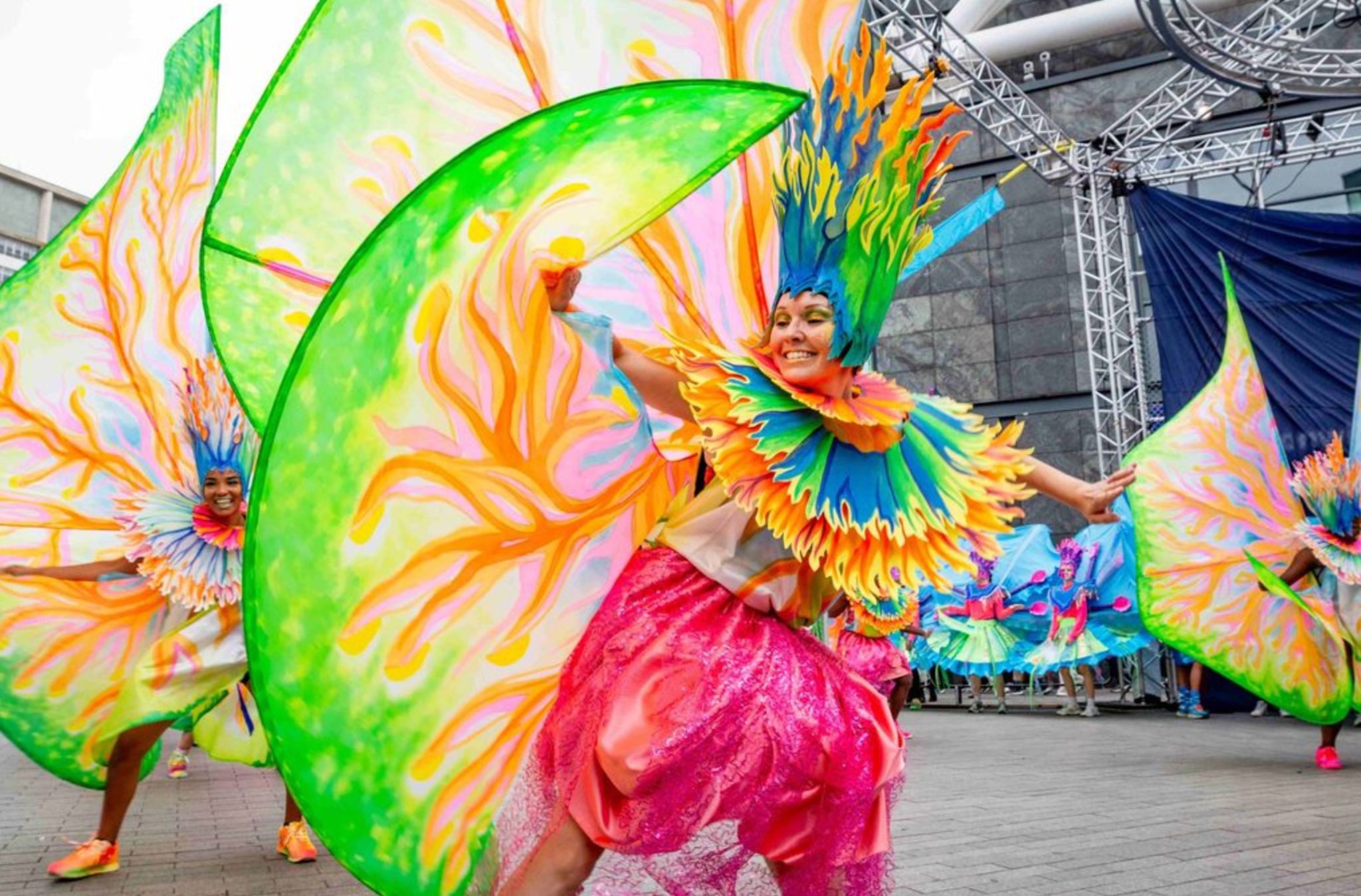
Very quickly, the Birmingham Weekender ceased to look like a collection of separate events and began to resemble a city in a state of disarray. Improvised venues spring up where you least expect them: on pavements, in open spaces near the Bullring Birmingham, between shop entrances, in places that usually exist only as a ‘path between point A and point B’.
There is no traditional division between stage and auditorium here. There are simply people going about their business, and suddenly—they stop. Some literally halfway through a step, some with a coffee in their hand, some with bags that, just a second ago, seemed more important than any art. And in this brief moment of bewilderment, the festival’s main effect is born.
Reactions vary, but they’re almost always genuine. Some look on with cautious suspicion—as if checking whether this is actually planned by the city authorities, rather than a random glitch in reality. Some quickly pull out their phones, capturing what they haven’t had time to put into words. And some simply linger a little longer than they intended and then move on a little more slowly than usual.
And what’s interesting is that, over the years, it ceases to look like an intrusion of art into everyday life. On the contrary, everyday life seems to begin to accept temporary deviations from its own routine. The city doesn’t stop, but allows itself brief disruptions to its rhythm—and it is precisely within these that the festival exists.
These aren’t scenes people go out of their way to see. They’re scenes people stumble upon by chance. And that, it seems, is precisely why they work.
What the festival brings to the town

Despite its lighthearted nature and sense of spontaneity, the Birmingham Weekender is by no means a haphazard event. Behind it lies a fairly well-defined system of cultural institutions, partnerships, and urban planning. In addition to the key role played by the Birmingham Hippodrome, the organisation involves municipal cultural bodies, arts organisations and partner foundations, which provide funding, logistics, and the very possibility of transforming the city centre into a temporary stage.
In this sense, the festival is not merely an artistic event but also a way for the city to manage its reputation. Birmingham uses such formats as a tool for cultural presence: to be not just a major industrial or commercial centre, but a place where something vibrant, unexpected, and public happens.
Some locals see this as a pleasant backdrop for a stroll, whilst others view it as an event worth looking forward to. But for most people, it is something in between: a chance cultural intervention in everyday life that is not imposed, but nor does it allow one to ignore it entirely.
More than just an event
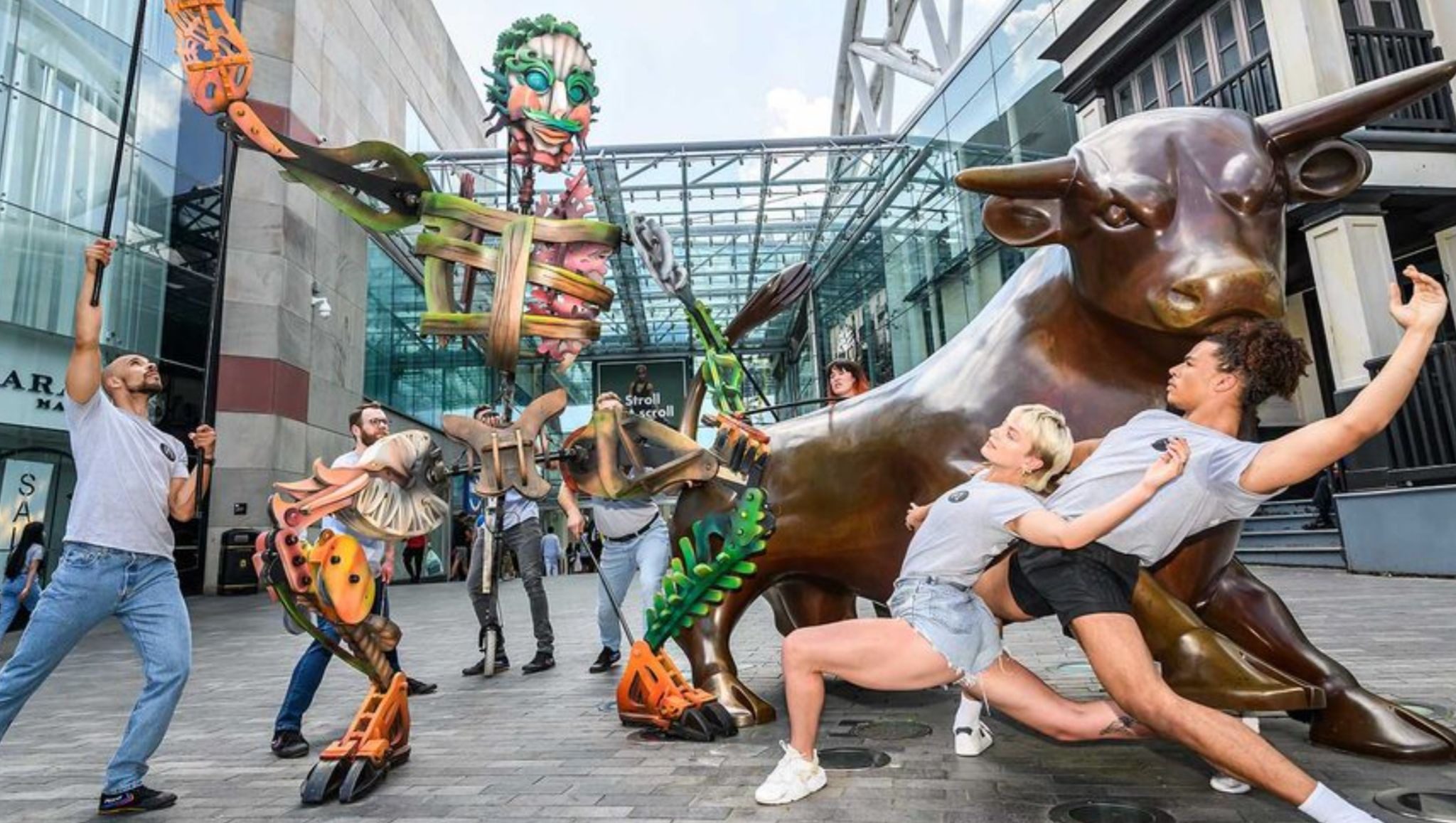
Ultimately, the Birmingham Weekender offers the city not so much an ‘event’ as a brief glimpse of a different way of thinking—and this despite the fact that we’re talking about a festival which attracts large crowds every year and takes place right in the heart of Birmingham. For a few days, the city allows itself to be a little different from usual, and perhaps that is precisely why such formats have become the new normal: the city sometimes wants to appear not only functional but also a little alive—even if that life takes place between queues for coffee and shop windows.
Sources: