

Birmingham is one of those cities that doesn’t feel the need to prove how ‘cool’ it is with words, because it has factories, canals, engineering workshops, and a touch of the Industrial Revolution’s stubbornness in its character. And if you look closely at the Guinness Book of Records, you might get a strange impression: it’s no longer about the people of Birmingham as such, but about what these people managed to build, assemble, launch, and at least mass-produce on a scale that would make a modern marketer nervously smoke on the sidelines.
You can now read about some of these achievements, and how and by whom they were created before making it into the Guinness Book of Records at birminghamski.com—and this is probably the best way to understand why records in Birmingham seem to be the norm, but as a logical consequence of local history.
All in all, the city has managed to set over 110 official world records, and most of them involve metal, ingenious engineering, and the smell of fuel oil. Although, to be fair, there are plenty of people there too—it’s just that they usually come ‘as part of a package’ with machinery, bridges, or yet another world ‘first.’
It is home to the world’s longest urban canal system, stretching 183.5 kilometres, and one of the oldest working steam engines on the planet, which has been running without fail since as far back as 1779. The irony is that the city, which once boasted of being the workshop of Britain, now lives quietly with its heritage, as if it were something ordinary rather than a collection of records.
The lifeblood of the Industrial Revolution
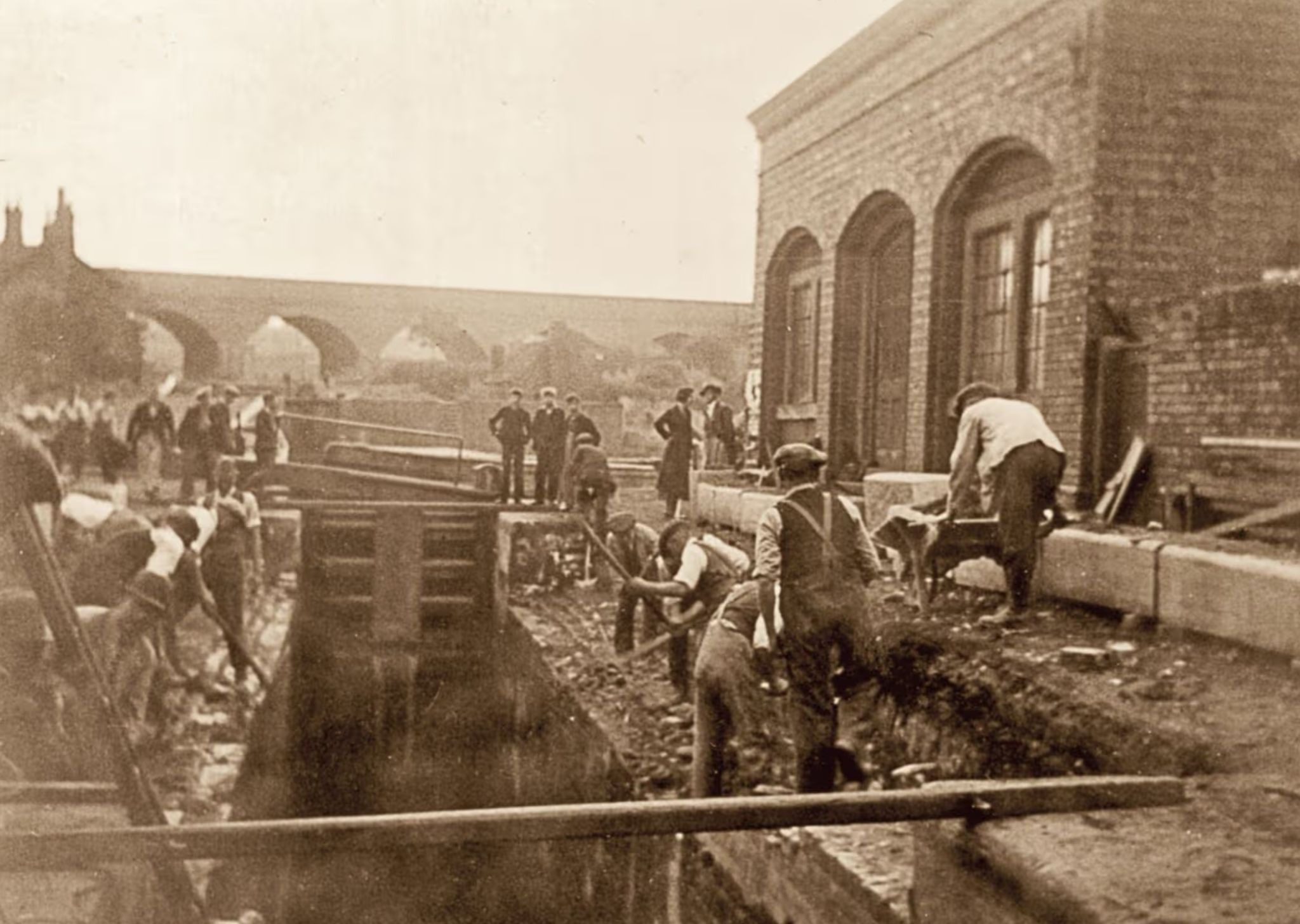
Next, we’ll be talking about the world’s longest network of canals. The Guinness Book of Records merely confirms what everyone already knows: their total length exceeds that of the famous canals of Venice. And this is no longer the romance of strolls for tourists but a fully fledged engineering system that served the economy.
But behind these figures lies a far more interesting story—not about the records themselves, but about the necessity that forced the city to literally redesign itself. The canals were not created out of a love for aquatic aesthetics, but out of the harsh necessity of the industrial era: Birmingham needed to transport raw materials quickly, cheaply, and on a massive scale.
It all began in 1768, when engineers and entrepreneurs began to develop the idea of a network of waterways that would connect factories, mines, and trading hubs. The planning was carried out by the practical minds of the time. The first routes were designed by the legendary self-taught engineer James Brindley, and John Smeaton—an outstanding engineer known as the ‘father of civil engineering’—later ’joined in expanding the network.
For them, the main consideration was not the beauty of the drawings, but the tonnage and speed of delivery. The plans gradually became more detailed, and each new section of the canal represented another step towards an industrial system that knew no respite. When, in November 1769, the first boat, loaded with coal, finally entered the city, it became clear: the rules of the game had changed forever.
The hands of thousands of workers, simple engineering solutions, and a steadfast belief that water could work better than the potholed roads of the time did the trick. And as a result, Birmingham did not simply gain a transport network—it gained the lifeblood of the Industrial Revolution, thanks to which the city became one of its key centres, the cradle where industry ceased to be a craft and became a large-scale enterprise.
An engineering marvel on the water and a freight boom
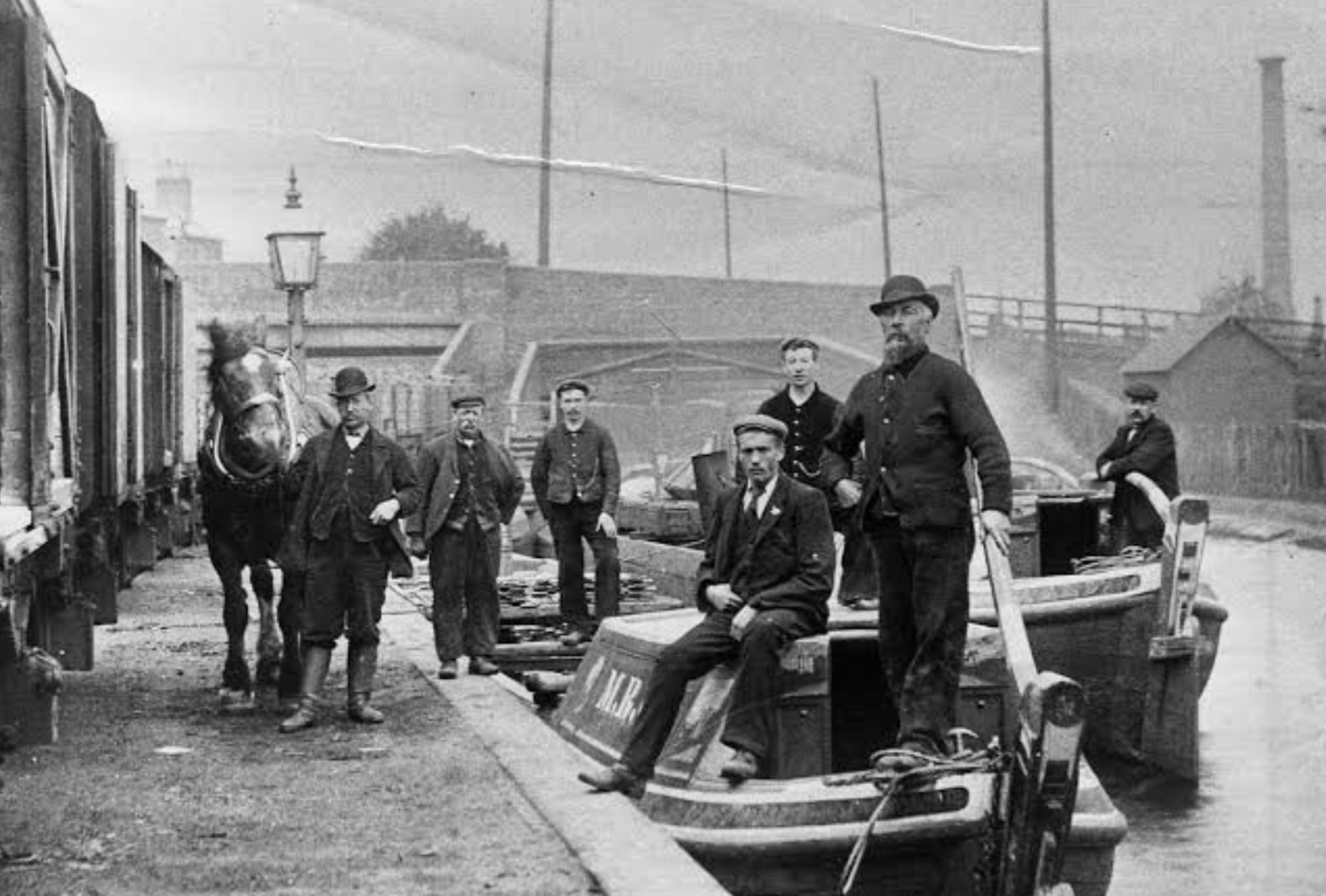
As Birmingham began to expand rapidly, its early canals resembled a confusing maze. They followed the natural contours of the landscape, which meant that boats were constantly getting stuck in traffic jams on sharp bends and at the numerous locks. The problem of canal navigation was solved in a radical way: in the early 19th century, the city commissioned the legendary engineer Thomas Telford.
Telford straightened the old, meandering river courses, cut deep cuttings into the hills, and built the New Main Line. It was a veritable waterway motorway—wide, straight, with two-way traffic and vital aqueducts and tunnels.
But the main architectural spectacle was provided by the waterway junctions. As the canals were built by different companies at three different levels, engineers had to create unique multi-level crossings where one canal passed over another via a bridge. The most famous centrepiece of this system was the Gas Street Basin—the place where the competing waterways met and where a bustling transport hub eventually developed.
During its industrial heyday (in the late 19th century), the Birmingham Canal Navigations network reached its peak, extending to over 257 kilometres. The freight statistics from that period are impressive even by today’s standards:
- At the height of their activity in 1898, the Birmingham canals carried a staggering approximately 8,5 million tonnes of cargo per year;
- The undisputed leader was the ‘black gold’ of the Industrial Revolution—coal. In addition to this, thousands of narrowboats continuously transported iron ore, limestone, finished metal, bricks, glass, and textiles;
- Traffic was so heavy that kerosene lamps were installed along the locks so that navigation would not come to a halt even at night. A single horse could pull a barge weighing 25–30 tons—ten times more than a horse pulling an ordinary cart.
However, in the 20th century, with the advent of railways and lorries, these waterways fell into disuse. By 1980, commercial use of the canals had virtually ceased, and around 100 kilometres of waterways had been neglected, filled in, or turned into rubbish dumps.
A renaissance on the waters of Birmingham
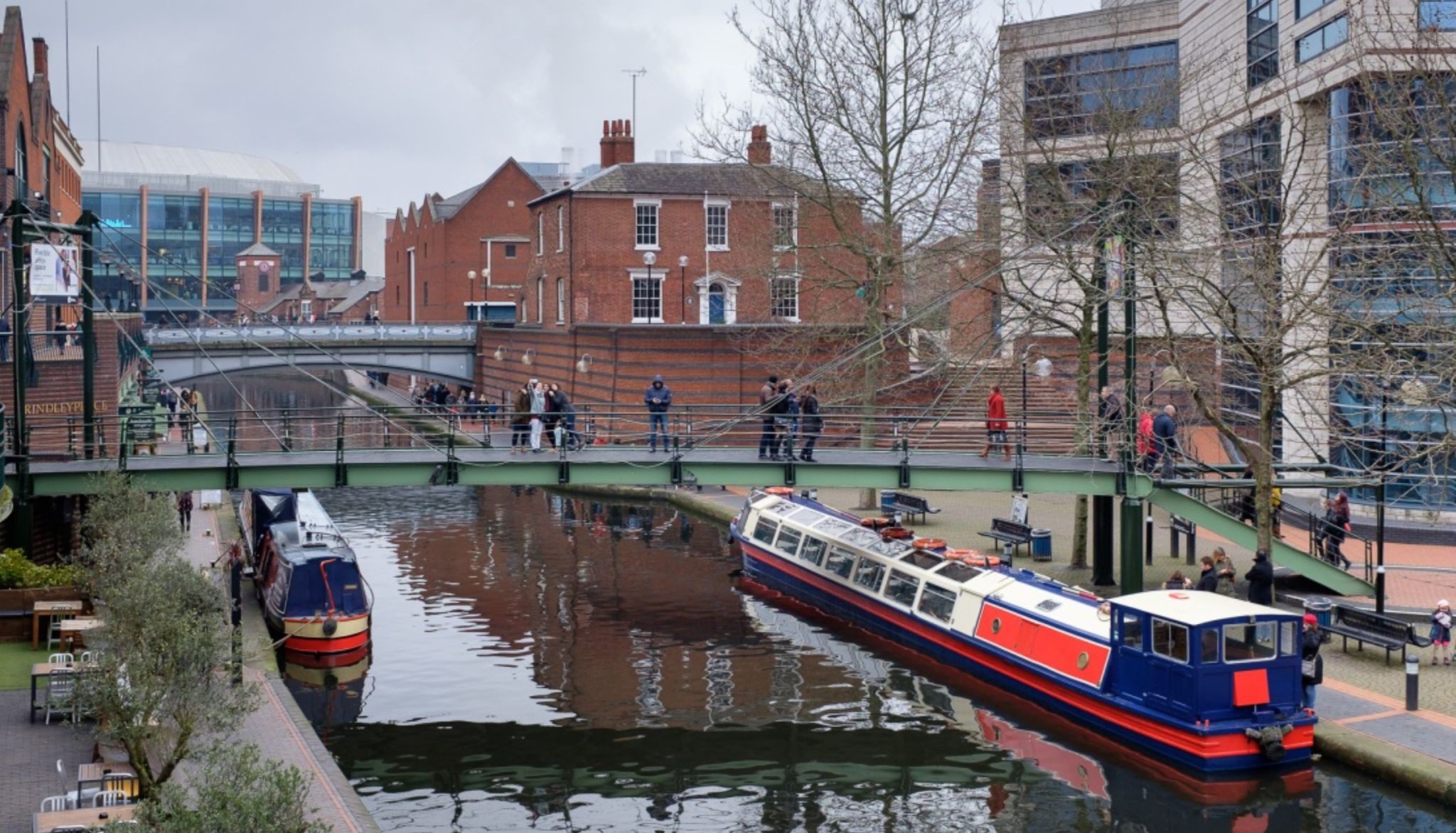
In the twentieth century, when railways and lorries had finally taken the canals’ bread and butter away, Birmingham found itself left with nothing. Or rather, with a silted-up trough. The former pride of the empire had turned into a network of stinking ditches where everything was dumped, from rusty bicycles to the remains of factory slag. It seemed that the industrial fairy tale had come to an end.
But the British wouldn’t be the British if they hadn’t come up with a gentlemanly solution: gentrification. Suddenly, it turned out that what once smelled of fuel oil and involved hard labour could now be sold at a profit as ‘unique historical authenticity’.
They organised a massive clean-up, cleared away tonnes of rubbish—and voilà: the once drab docks have been transformed into the upmarket Brindleyplace district. Nowadays, instead of hard-working labourers with shovels along the canals, tourists stroll leisurely with paper cups of latte. The factory warehouses, where iron was once stored, have been converted into cosy pubs, galleries, and luxury apartments with views of the water.
Instead of coal barges, sightseeing boats now ply the waters, and guides proudly talk about the ‘symbiosis of urbanism and ecology.’ A great irony of the post-industrial era: for centuries, Birmingham built a gigantic engineering machine to make money, only for future generations to eventually turn it into a photo spot for social media and the perfect place for Sunday brunch.
Records that will never go out of date
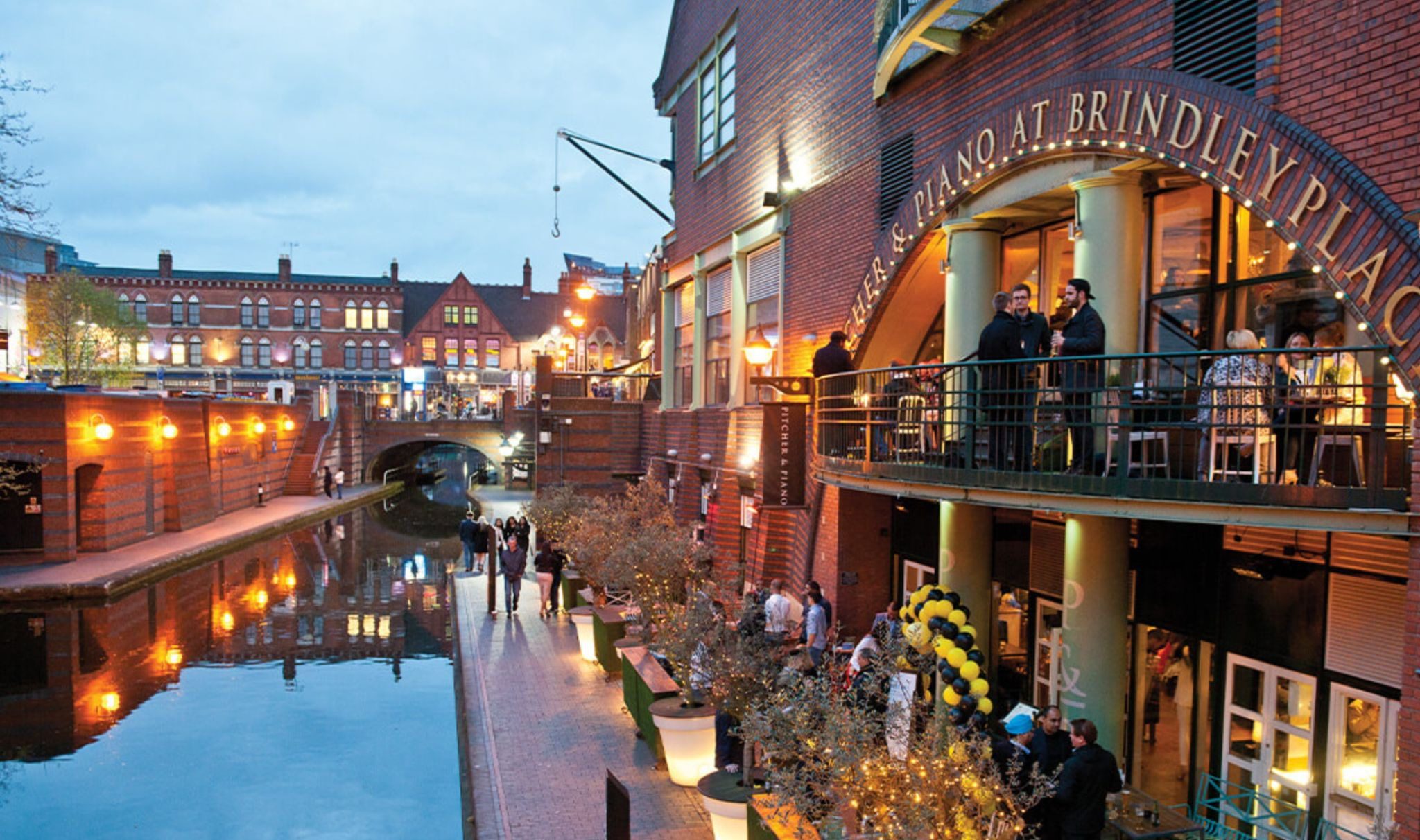
So the fact that Birmingham’s canals feature in the Guinness Book of Records is no historical fluke or whim of the statisticians. It is a triumph of pure pragmatism over geography, backed up by the figures. And to fully grasp this, there’s no need to leaf through old reference books.
It’s well worth visiting here at least once: strolling past the old locks, ordering a glass of ale in a pub that used to be a railway depot, and seeing for yourself how this harsh industrial past still bears the weight of all this modern tourist charm.
Sources:
- https://www.birmingham.gov.uk/info/50050/culture_arts_and_heritage/179/canals_of_birmingham
- https://www.birminghammail.co.uk/news/nostalgia/guinness-world-records-celebrating-60–7773930
- https://www.galliardhomes.com/guides/birmingham/15-things-you-didnt-know-about-birmingham
- https://www.bcu.ac.uk/student-info/why-study-at-bcu/living-in-birmingham/facts-you-didnt-know
- https://www.birminghamworld.uk/lifestyle/guinness-world-records-birmingham-3751446?page=4
- https://www.guinnessworldrecords.com/world-records/108352-longest-urban-canal-system