

Birmingham is traditionally associated with the Industrial Revolution, engineering, and innovation. It was here that technologies were developed that transformed Britain, and for centuries the local factories and workshops attracted people with unconventional thinking. It was here that new technologies were invented, the Industrial Revolution was launched, and the factories of the future were built, but at the same time could frighten a provincial vicar half to death with their first rumbling steam locomotive on a nighttime road or walk about with an experimental gas lamp in their hands. This is precisely how the Scottish-born engineer and inventor William Murdoch made his mark in his day, a man whom his religious contemporaries nearly branded as a messenger from hell.
Another local inventor, the printing genius John Baskerville, was a perfectionist; he was so fanatical about the quality of printing paper that his contemporaries marveled at its incredible sheen, which literally ‘dazzled’ readers. But Francis Galton went further than anyone else: this gentleman tried to measure literally everything he saw around him. And sometimes even things that a normal person would hardly have thought to measure in the first place. On birminghamski.com you can read exactly what the founder of Victorian eugenics was counting, what else he was famous for, and why, to his contemporaries, he was not only a scientist, but also a very peculiar eccentric.
Francis Galton’s childhood and travels
Francis Galton was born on 16 February 1822 near Birmingham, into a wealthy family of bankers and industrialists, where there was enough money to allow the child to pursue unusual interests without worrying whether he would find a ‘proper job.’ Indeed, that is exactly what happened with Galton. Even as a child, he displayed the classic signs of a future Victorian eccentric: he read earlier than his peers, was fascinated by numbers, was constantly organising things, and possessed that very dangerous trait which would later make him famous—the desire to classify, measure, and record everything around him in a table.
His family was more than remarkable. His grandfather was the renowned physician and naturalist Erasmus Darwin, and his cousin was none other than Charles Darwin himself. So the atmosphere in the family was such that if you hadn’t discovered a new law of nature by lunchtime, the day seemed to have been wasted.
Galton was initially groomed for a career in medicine. He studied at medical institutions in Birmingham and later enrolled at King’s College London, where he studied medicine. However, he would probably have made a rather restless doctor. He quickly grew tired of medical practice and went on to the University of Cambridge, where he was more interested in mathematics, statistics, and his own ideas than in academic discipline. He completed his studies without any particular distinction.
Following his father’s death, Galton inherited a substantial fortune, which finally set him free from financial constraints. With no need to work ‘to make ends meet,’ he became the quintessential Victorian gentleman-scientist: he travelled, wrote books, conducted experiments, and was constantly pursuing new intellectual interests. In the mid-19th century, he even set off for Africa, where he undertook geographical surveys of the territory of modern-day Namibia.
Following his travels in Africa, Galton was elected a Fellow of the Royal Geographical Society, and shortly afterwards he began to gradually shift his focus from geography to statistics, psychology, and anthropology. It was at this point that the chapter of his life began for which he is most often remembered today. Galton was utterly captivated by the idea of human differences. He wanted to understand why some people are ‘more talented’ than others, and whether this could be measured, inherited, and even predicted.
The scientific theories of Francis Galton
It was Galton who effectively laid the foundations of modern statistics. And that is no exaggeration. He was genuinely interested in how heredity works, why certain traits are passed down through generations, and whether human abilities can be described mathematically. In the course of this research, he began to develop methods of data analysis, without which neither economics, nor medicine, nor sociology can manage today. It was he who laid the foundations for the concept of correlation—that is, a mathematical way of determining whether different phenomena are related to one another.
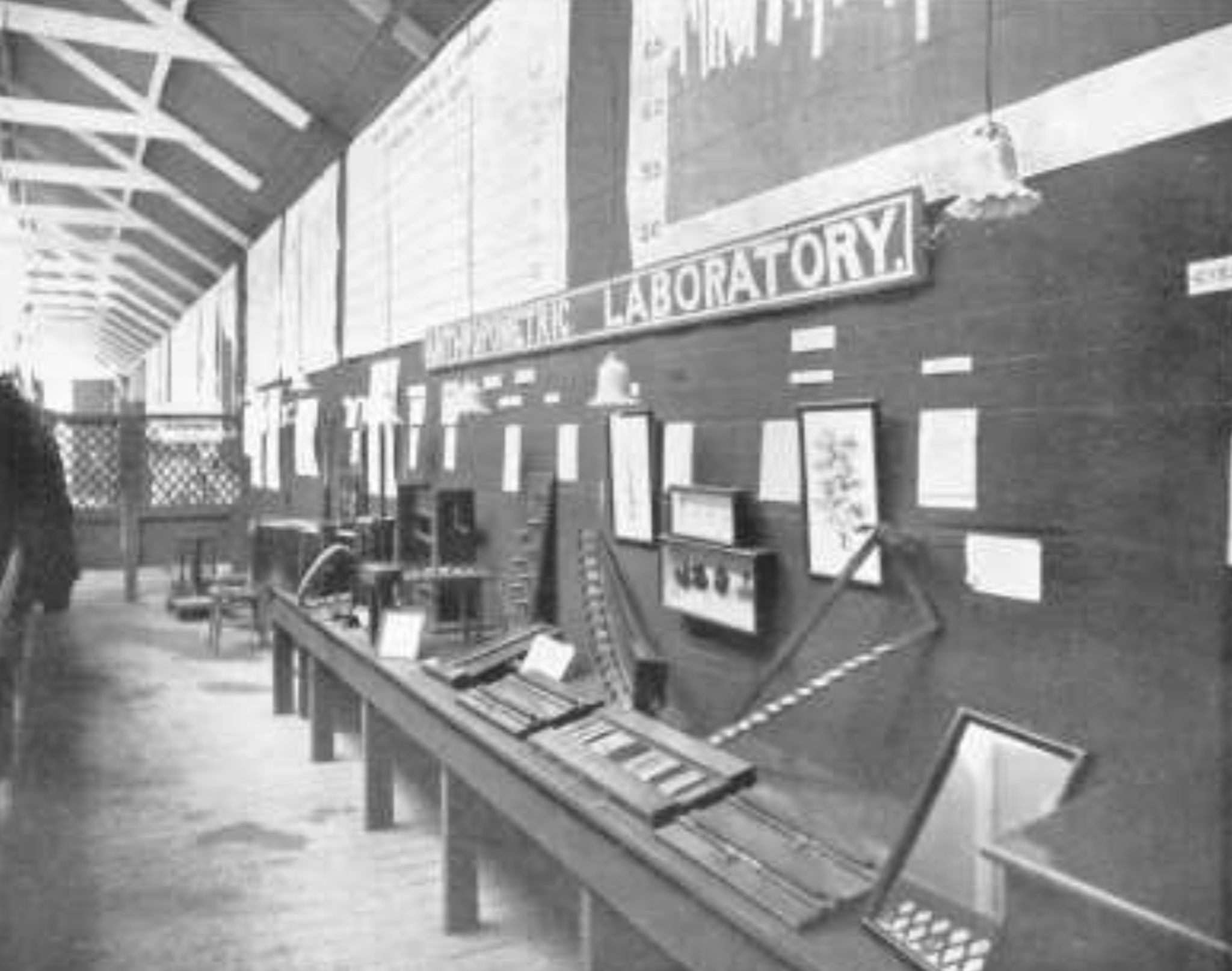
Galton developed a particular passion for anthropometry—the measurement of the human body. And here he really came into his own. The scientist measured height, weight, skull shape, grip strength, reaction time, visual acuity, and dozens of other parameters. In London he even opened the famous ‘Laboratory of Human Measurements,’ where visitors paid a nominal three pence to undergo a full assessment and receive a card with their results.
Another field in which Galton is still remembered today is forensic science. He was one of the first to undertake serious research into fingerprints. Before him, people had already noticed that everyone’s skin patterns were different, but it was Galton who became interested in whether this could be used for reliable identification.
He classified the different types of fingerprints, demonstrated their uniqueness and immutability throughout a person’s life, thereby laying the foundations for the future forensic system. However, the most controversial aspect of his work was eugenics. At the end of the 19th century, Galton became fascinated by the idea of ‘improving humanity’ through artificial control of heredity.
It was he who coined the term ‘eugenics.’ In Halton’s logic, it all looked like a dry mathematical problem: if good qualities are inherited, why shouldn’t society encourage ‘appropriate’ marriages and the birth of ‘gifted’ children? The problem was that such theories very quickly began to slide into dangerous ideas about the unequal ‘value’ of different groups of people. Yet to some of the Victorian elite, it sounded at the time like the progressive science of the future.
The greatest eccentric of the Victorian era
Francis Galton earned his reputation as an eccentric Victorian gentleman primarily because of his almost obsessive love of measurement and classification. Galton attempted to quantify literally everything he saw around him: human beauty, the level of boredom in lectures, the ‘talent’ of families, reaction times, the shape of the nose, the strength of a handshake, or even the effectiveness of prayer.
And he did so with the utterly serious expression of a man who had just discovered a new law of nature. For Victorian society, which already had its fair share of eccentric scientists, Galton stood out precisely because of the scale of his ideas: he was not merely fascinated by statistics, but seemed to genuinely believe that humanity could be fully described by tables, graphs, and formulas.
It was precisely for this reason that his contemporaries often saw him not merely as a scholar, but as a somewhat eccentric intellectual who had taken his calculations a bit too far.
Galton’s Paradox
And this is where Galton’s main paradox arises. Many of his scientific methods have truly changed the world: statistics, data analysis, criminology, and research into heredity—all of these have had a huge impact on science. But at the same time, some of his ideas have shown just how dangerous the desire to reduce a person to a mere set of numbers can be.
Galton himself was often regarded by his contemporaries as an eccentric intellectual, somewhat obsessed with his own calculations. But looking back from the 21st century, it is clear that his legacy proved to be far more complex than it appeared in Victorian England.
Sources: