

Nowadays, the football world moves at such a frantic pace that transfers worth 100 or even 200 million euros no longer surprise anyone. Fans might briefly look up from their phones to whistle in astonishment, only to spend the next day debating a new financial record. It feels as if it has always been this way. Yet, European football once existed in a completely different reality. Back then, even a sum of one hundred thousand pounds made club directors think twice, while a figure of one million was dismissed as pure fantasy.
This is why the first-ever transfer of a British footballer exceeding one million pounds—breaking a major psychological barrier—became a global sensation and dominated headlines for months. It is particularly fitting that the protagonist of this epoch-making event was none other than the youth academy graduate and legendary forward of Birmingham City, Trevor Francis. His sale in 1979 ushered in a new era for the football transfer market. Read more about this legendary deal, the record-breaking million-pound contract, and the destiny of its star on birminghamski.com.
From Amateur Football to the First Major Transfers
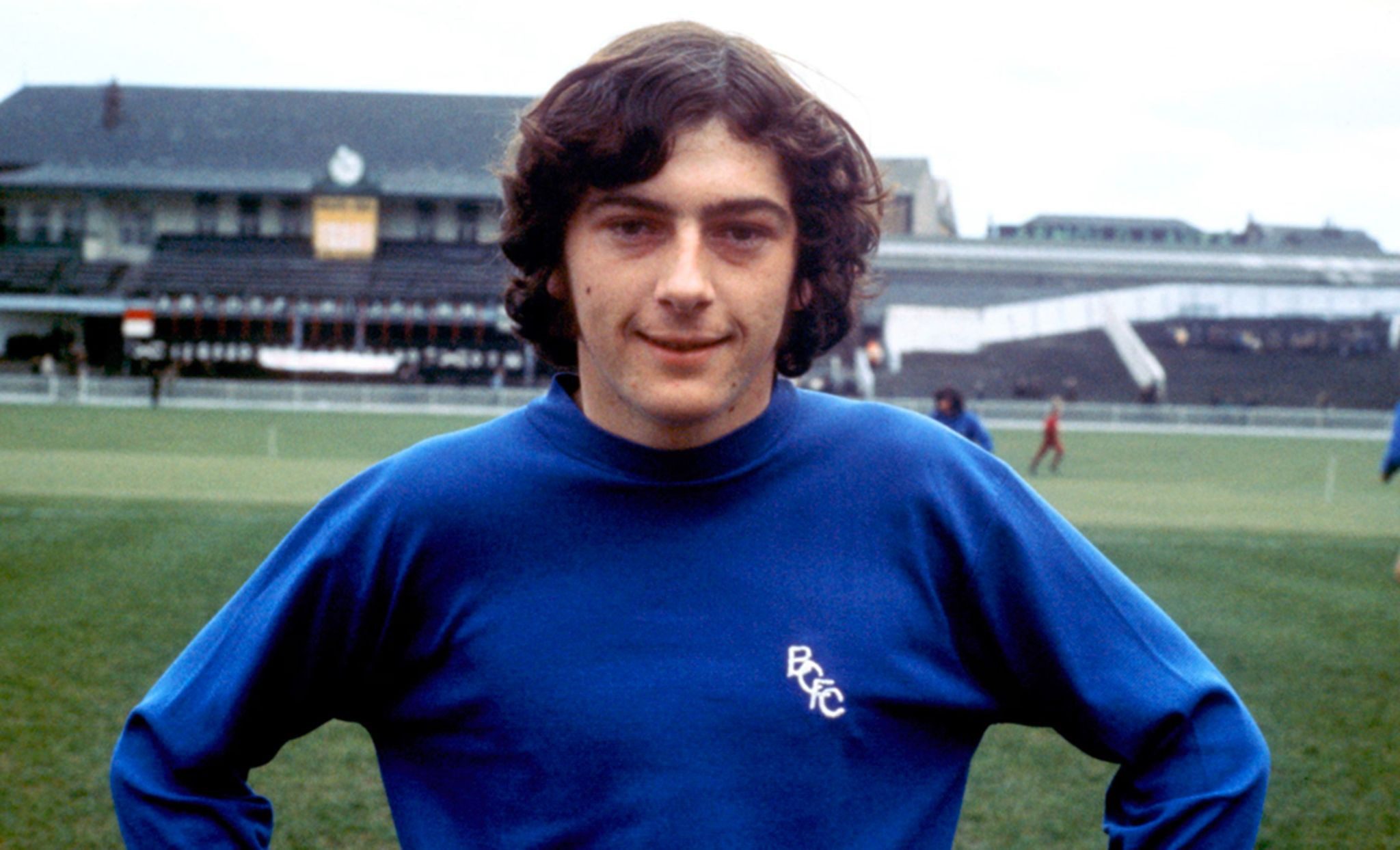
Today, it is hard to imagine professional football without the transfer market. Every off-season, clubs spend hundreds of millions on new signings, agents conduct endless negotiations, and sports websites report daily on the latest record contract. However, it was not always this way. In the early days of English football, the very concept of a transfer did not exist.
When the first season of the Football League kicked off in 1888, players often combined football with regular jobs. Some worked in factories, others in workshops or coal mines, with matches played mostly on weekends. Clubs did not pay astronomical wages, and players did not become multi-millionaires before their twentieth birthdays. If a player did move to another team, it was often for a symbolic fee or even entirely for free.
Towards the end of the 19th century, English football gradually became professional. With this shift came the first official registration rules, and clubs began paying compensation for player moves. Initially, these fees were what we would now consider laughing matters—even a few hundred pounds was deemed a major expense. Over time, figures rose into the thousands, and the transfer market accelerated rapidly after World War II.
In 1961, English football finally abolished the maximum wage limit, which had restricted the market’s growth for decades. Even then, the one-million-pound mark seemed like a psychological barrier destined to stand for many years. Yet, in 1979, English football proved that even the boldest financial forecasts could quickly become a reality.
Trevor Francis of Birmingham: A Star Ahead of His Time
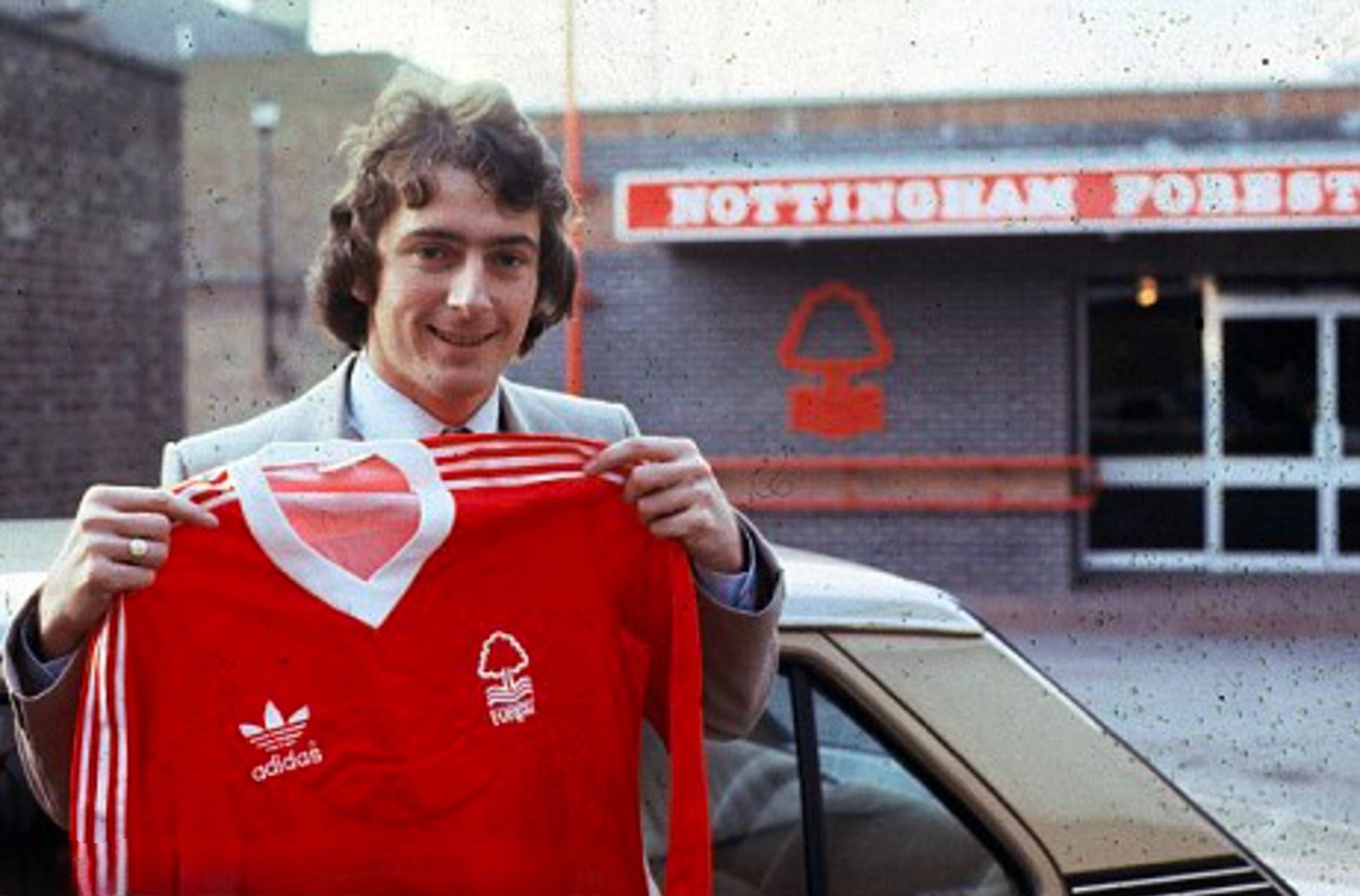
The protagonist of this unprecedented transfer revolution was a player whose name is forever etched in the history of the Blues: Trevor Francis. Although the future forward was born on April 19, 1954, in Plymouth, sometimes a well-timed move is all it takes for a new city to adopt you as one of its own.
Francis caught the eye of Birmingham City scouts as a schoolboy and joined the club’s youth setup. In September 1970, aged just 16 years and 147 days, Trevor made his first-team debut. It was a remarkable period, with the teenage Francis fearlessly going head-to-head with the seasoned, physical defenders of the English league.
While naturally a forward, he could drop deep with grace, orchestrating attacks as a deep-lying striker. Not blessed with towering physical presence, he avoided direct physical duels. Instead, his main weapons were explosive pace, flawless dribbling, superb ball control, and an innate eye for goal.
The St Andrew’s faithful fell in love with him instantly. For the fans, Francis was more than just a top scorer; he was the embodiment of the club’s identity. Every match, supporters expected magic: an unpredictable feint, a defense-splitting pass, or another spectacular goal. By the late 1970s, it was clear that Trevor’s immense talent had outgrown Birmingham City. Interest from the country’s elite clubs was inevitable—the only question was who would be the first to shell out an astronomical fee.
A Million Pounds, a Squash Match, and Brian Clough: How Trevor Francis Left Birmingham
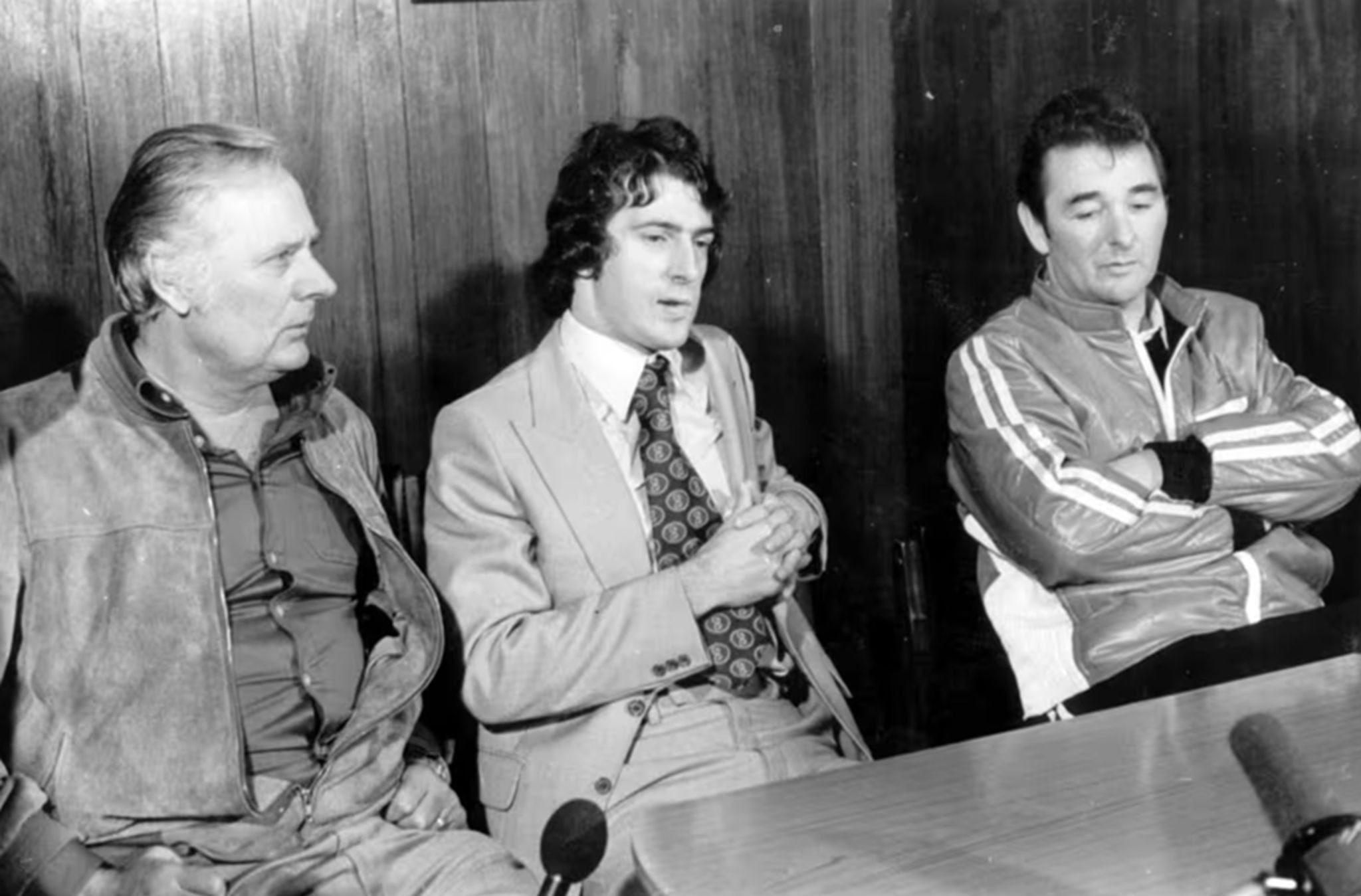
In February 1979, what once seemed like football fantasy became reality. The reigning English champions, Nottingham Forest, managed by the eccentric and legendary Brian Clough, purchased Trevor Francis from Birmingham City. The event went down in history as British football’s first “million-pound transfer,” though the exact figures are still the stuff of legend.
It is a well-known story that Brian Clough was desperate to keep the weight of that massive fee off the young striker’s shoulders. At the press conference, he pointedly declared that the base transfer fee was £999,999. However, when taxes (VAT) and the mandatory levy for the players’ union were factored in, the total amount paid by Nottingham Forest exceeded £1.18 million—an absolute, jaw-dropping British record at the time.
The signing itself on February 9, 1979, turned into a theatrical event that perfectly captured the spirit of the era:
- An unconventional manager’s style: Brian Clough appeared before dozens of reporters wearing a bright red tracksuit and holding a racquet, openly stating that he was in a great hurry to play a scheduled game of squash;
- The star’s obedience: during the official presentation, Clough sternly ordered Francis to take his hands out of his pockets. The new signing immediately complied under the flashing cameras, instantly understanding who was boss in the dressing room.
For Birmingham City, the transfer was a painful parting with their idol, but it also secured a massive financial windfall for the club. As for Trevor Francis, he vindicated every penny spent on him. Just a few months later, on May 30, 1979, his bullet header in Munich clinched a 1-0 victory for Nottingham Forest against Swedish side Malmö, securing their historic first European Cup. With that single match, Francis proved his talent was truly priceless.
A Legendary Return: Trevor Francis as Manager in Birmingham

Following his phenomenal success with Nottingham Forest, Trevor Francis enjoyed a stellar playing career. He went on to represent Manchester City, Queens Park Rangers, and Sheffield Wednesday in England, conquered Italy’s Serie A with Sampdoria and Atalanta, and spent a season with Scotland’s Rangers.
Over his entire playing career, the forward made 632 official appearances, scored 234 goals, and earned 52 caps for the England national team. Later, Francis returned to his boyhood club in a new capacity: from 1996 to 2001, he managed Birmingham City, guiding the side to the Football League Cup final in 2001.
In July 2023, the legendary forward passed away in Spain at the age of 69. He is remembered not just as a technically gifted forward, a manager, or the scorer of golden goals, but as a pioneer who tore up the football business rulebook. He became the first British player whose sheer talent was officially valued in seven figures, changing the landscape of the global transfer market forever.