

John Cadbury was born in Birmingham in 1801 and went on to found the Cadbury chocolate company, one of the most famous and beloved chocolate brands in the world. It all began in 1824 when he opened a small grocer’s shop in Birmingham. There, he sold cocoa and drinking chocolate, laying the groundwork for the chocolate manufacturing the company would become famous for. Cadbury’s ethical treatment of its employees and its commitment to social projects also left a lasting mark on the city of Birmingham. To learn more about this world-renowned Brummie, visit birminghamski.com.
Tea, Coffee, Cocoa and Chocolate
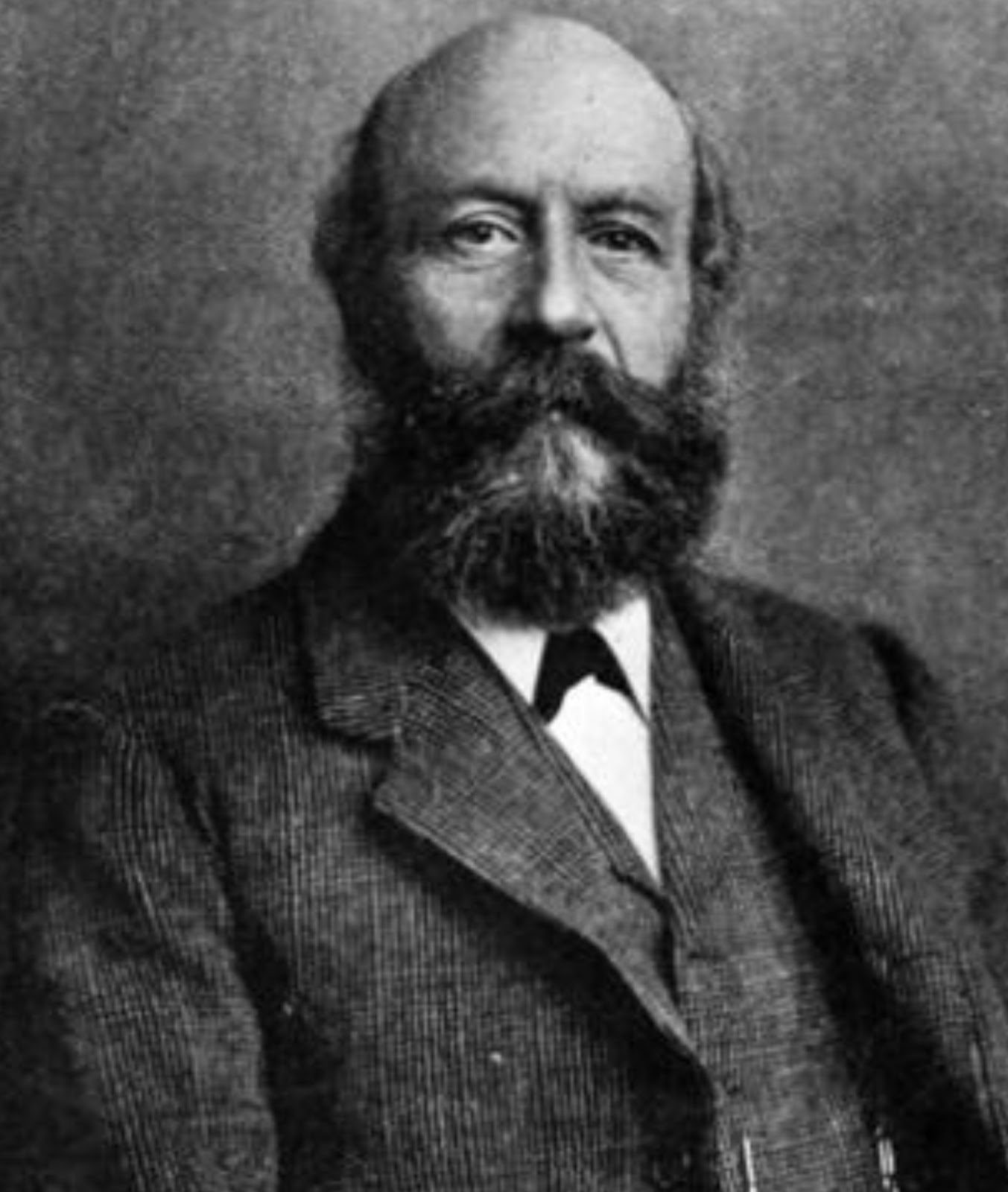
John Cadbury was born to Richard Tapper Cadbury and his wife, Elizabeth Head. He came from a wealthy family who were prominent members of the Religious Society of Friends, also known as Quakers. The Cadbury family had relocated to Birmingham from the West of England. As a boy, John attended Joseph Crosfield’s Quaker school in Hartshill, Warwickshire.
In 1824, he opened a grocer’s shop at 93 Bull Street in Birmingham. Among other goods, he sold cocoa and drinking chocolate, which he prepared himself using a pestle and mortar. As a devout Quaker, he believed alcohol was harmful to society and saw tea, coffee, cocoa, and chocolate as healthy alternatives.
John Cadbury’s concoctions quickly became popular. By 1831, he had purchased a nearby warehouse and started manufacturing with the help of his sons, George and Richard Cadbury. As the business grew, they moved to a larger factory on Bridge Street in 1847. After John’s health declined, he retired from the business in 1861, leaving Richard and George to take the reins. George managed production while Richard handled sales. Times were so tough that George once remarked he would retire a happy man if the business ever turned a profit of one thousand pounds a year. The turning point finally came when the brothers invested in a revolutionary new cocoa processing method.
The problem at the time was that cocoa was made with a large amount of cocoa butter. This butter had an unpleasant taste, so manufacturers would add starch to mask its flavour and texture. Then, George Cadbury learned of an innovative cocoa press used by the Dutch manufacturer van Houten. The press was so effective it squeezed most of the cocoa butter out of the beans, making the addition of starch unnecessary.
Cadbury Cocoa Essence
Using this cocoa press, George and Richard discovered they could make their cocoa 100% pure. It’s hard to believe now, but other chocolate makers of the era often padded their cocoa with animal fat, red lead, and even brick dust. The brothers, however, focused on creating a completely pure product. In 1866, they launched Cadbury Cocoa Essence, which was advertised as “Absolutely Pure, Therefore Best.”
Cadbury’s own milk chocolate bar, made by adding milk powder to a dark chocolate recipe of cocoa mass, cocoa butter, and sugar, was first introduced in 1897. At the time, Swiss manufacturers dominated the milk chocolate industry, and their products were far superior to their competitors’. So, in 1904, George Cadbury was tasked with developing a milk chocolate bar that contained more milk than anything else on the market.
Once the chocolate was perfected, the next challenge was naming it. Various names were suggested, from “Highland Milk” and “Jersey” to “Dairy Maid.” But when a customer’s daughter suggested “Dairy Milk,” the name stuck. And so, Dairy Milk was launched in June 1905. It was initially sold in unwrapped blocks that could be broken down into smaller bars.
The product’s success grew steadily. By the start of the First World War, it was Cadbury’s bestseller. By the early 1920s, the company had captured the UK market. Of course, the bar is still made and sold today. Cadbury Dairy Milk has become a global megabrand, available in countless variations all over the world.
In 1878, the brothers began searching for a site to build a new factory. George asked himself a simple question: why should an industrial area have to be bleak and depressing? With this vision in mind, work began on the plans for the new factory, with the help of Birmingham architect George H. Gaddom.
The Creation of Bournville
In the 1870s, Birmingham was in the midst of an economic boom. Its pioneering mayor, Joseph Chamberlain, was clearing slums to build the Parisian-style Corporation Street, the Council House, a museum, and an art gallery. But the Cadbury brothers looked beyond the city centre to bring their vision to life. They found a suitable site south of Birmingham, complete with a meadow, a cottage, and a stream called the Bourn. By adding “ville,” the French word for “town,” they named the site Bournville. This French-sounding name was a clever marketing move, as French chocolate had the best reputation at the time.
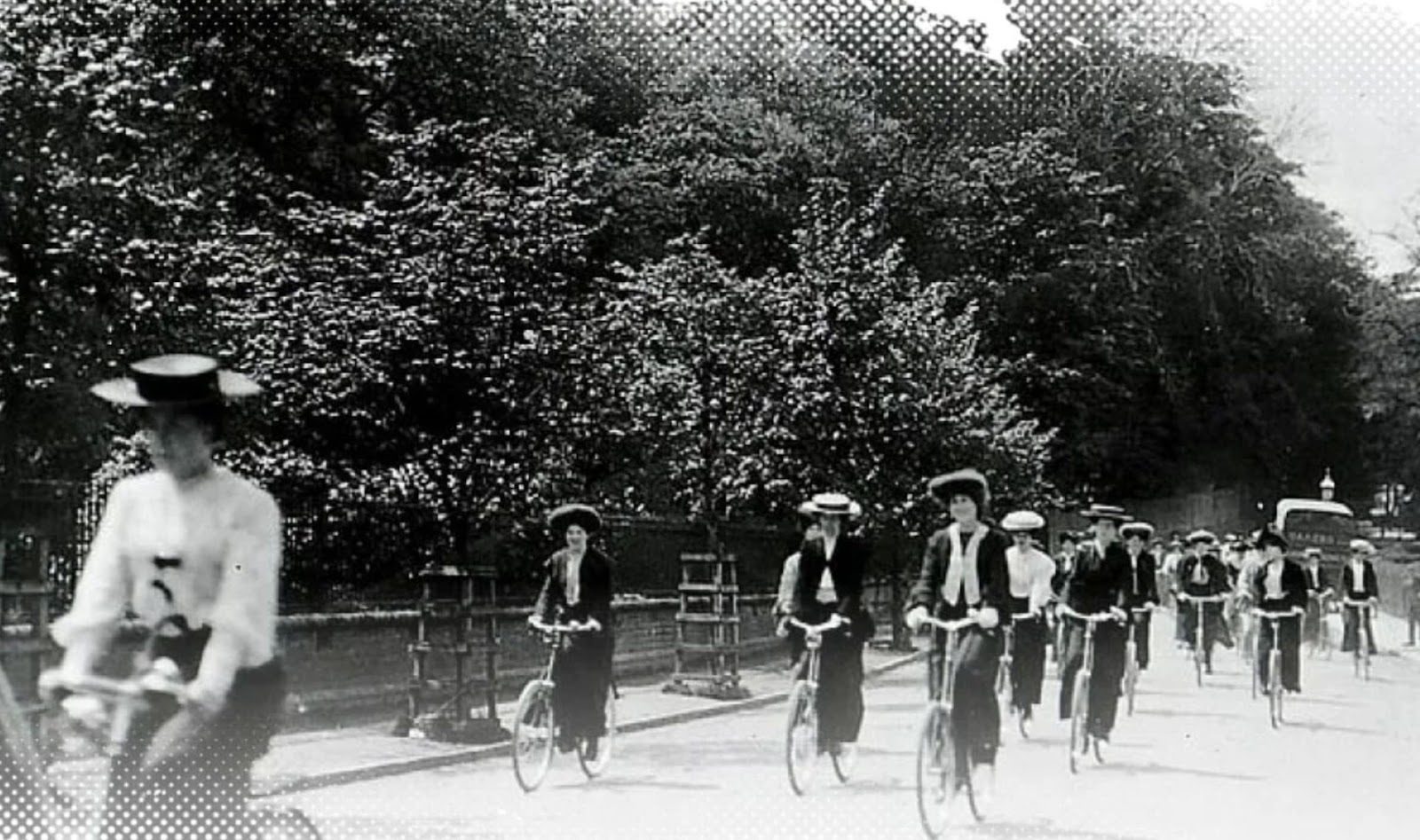
Bournville boasted excellent transport links and plenty of room for expansion. George envisioned a place full of green spaces where Cadbury workers could escape the crowded and often grimy city to enjoy a better quality of life surrounded by nature. In addition to the Bourn stream, the site was served by the Worcester and Birmingham Canal and a railway line. Construction of the factory began in January 1879, along with the first 16 houses for employees. Bournville was designed to be a place where factory workers could live, work, and play.
The first train carrying 230 workers arrived in September 1879. The Cadbury brothers purchased the rest of the estate in 1893, prioritising houses for key workers and ample green space. The Bournville factory grew to become the largest cocoa manufacturer in the world, employing up to 15,000 people at its peak. The surrounding garden village was seen as an innovative solution for housing the working class. However, in keeping with the Cadburys’ Quaker ideals, there was no pub, and alcohol was not sold anywhere in Bournville.
The Cadbury Foundation

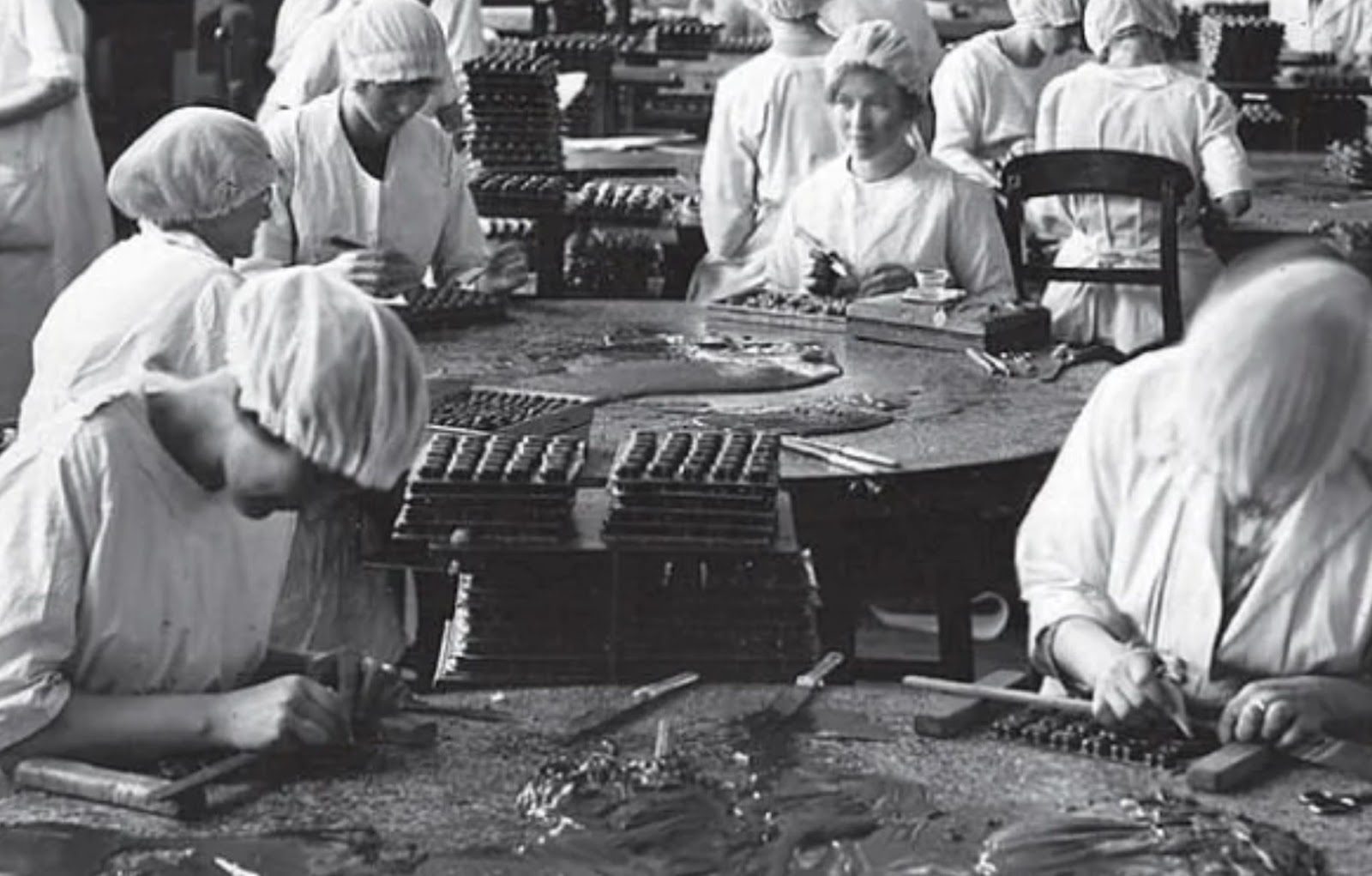
Children enjoyed the new playground, country outings, and summer camps, while the men played football, hockey, and cricket. In 1902, 30% of Cadbury’s capital expenditure was spent on employee welfare. Tennis and squash courts, a bowling green, and swimming pools with heated changing rooms were built. Such facilities were unheard of for workers in the Victorian era. Cadbury also became one of the first companies to introduce a half-day on Saturdays. As George Cadbury later recalled, some entrepreneurs predicted this would ruin the factory, but events proved them wrong.
During the First World War, the company’s milk supplies were redirected to the people of Birmingham, the factories were used to produce dried fruit and vegetable pulp, and buildings were converted into hospitals. When the Second World War broke out, the Bournville factory switched to producing doors for Spitfire fighters, casings for aircraft signal lights, various aircraft parts, gas masks, and jerrycans.
In 1935, the Cadbury family established The Cadbury Foundation to honour the brothers and continue their work. The Foundation draws inspiration from them to this day, supporting colleagues and the wider community through volunteering, funding, and assistance to local schools, charities, individuals, and businesses. As always at Cadbury, it’s important for everyone to play their part.