

Postwar Birmingham has a rather interesting—if not downright strange—reputation in British culture. While London in the prewar history of the early 1940s was traditionally presented as the capital of art, fashion, new ideas, and talented people, Birmingham long remained a city of factories, metal, smoke, and workers. They supposedly had no time for abstractionism. After all, what kind of art is there when you’re surrounded by steel beams, factory chimneys, workshops, and the endless rumble of industry?
However, the story turned out to be far more interesting than the capital’s stereotypes. It was after the war that Birmingham unexpectedly became one of the places where British modernism began to take on its own, highly distinctive character. While the capital gazed admiringly toward galleries and art critics, the Midlands lived amid ruins, concrete structures, new transportation hubs, and technocratic optimism, which at the time seemed almost like a religion.
Bombing, reconstruction, the noise of factories, and the feeling of life “in the aftermath of a catastrophe” suddenly became the ideal environment for the emergence of several artistic movements—from abstract painting to experimental design. Sometimes the most interesting art isn’t found where it’s heavily promoted—see for yourself by learning more about the region’s unique culture on the website birminghamski.com.
How Birmingham Abstract Art Came to Be
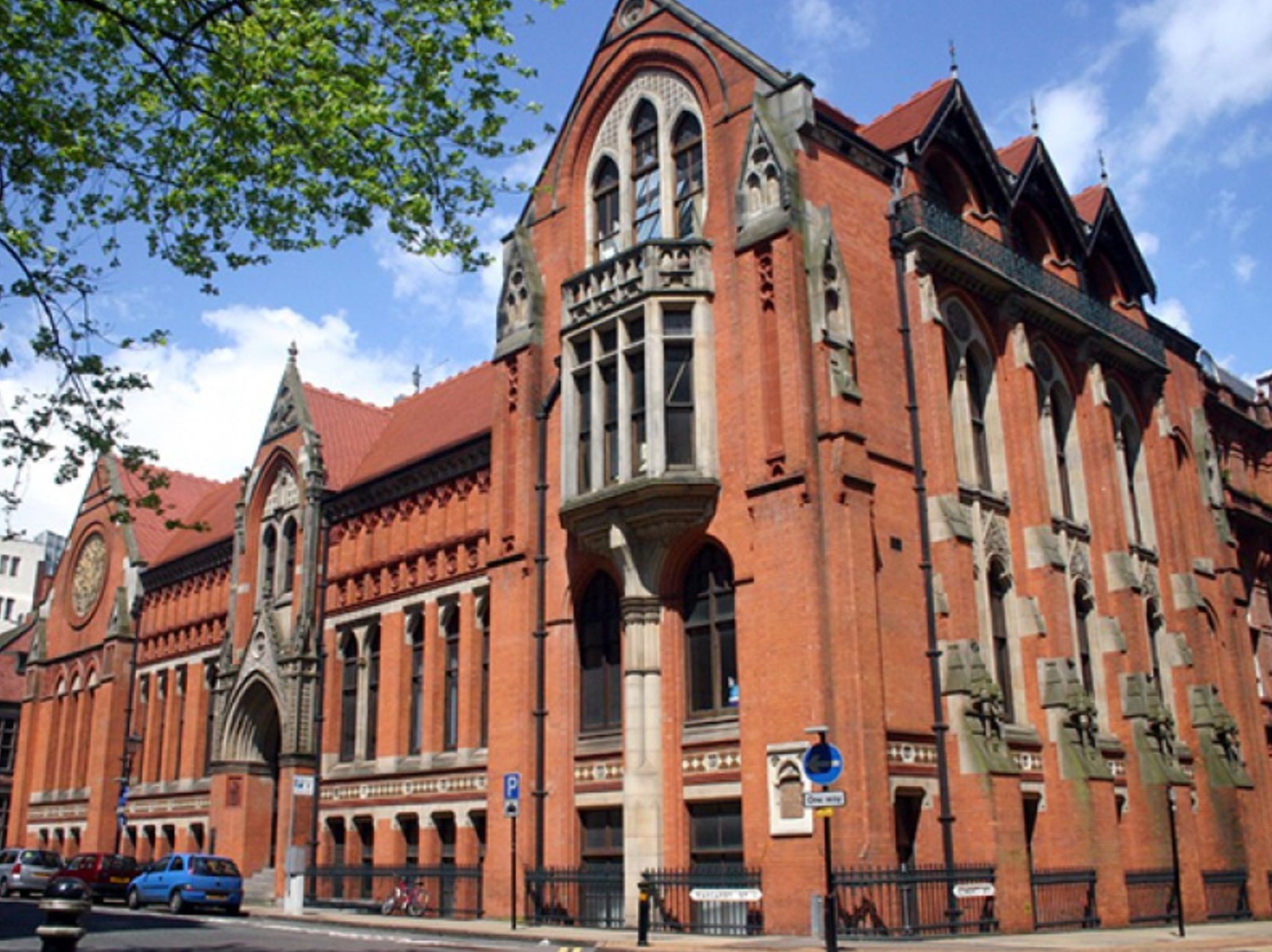
The postwar rise of British abstraction was closely linked to the faculty and artists at the Birmingham College of Art. This institution became one of the main hubs of British modernism.
It was quite paradoxical: the city was recovering from the bombings, large-scale reconstruction was underway, industry was working nonstop, and concrete architecture was growing much faster than trees. Against this backdrop, abstract painting seemed like a strange intellectual luxury. But it was precisely this industrial chaos that created an environment in which the new aesthetic took root particularly vigorously.
For the college students, this came as a real culture shock. For a long time, British art education had remained restrained and conservative: composition, iron discipline, and precise form. Yet they were effectively offered the exact opposite—emotion, movement, instinct, and bold experimentation.
Thus, the local school began to move away from the “neat” postwar art toward a more expressive and physically tangible style of painting. As a result, Birmingham became the regional hub where abstract art ceased to be merely a “strange London fad.” Here, it appeared as a natural extension of the city itself—industrial, bustling, concrete, and perpetually unfinished.
The Two Faces of Birmingham Abstraction
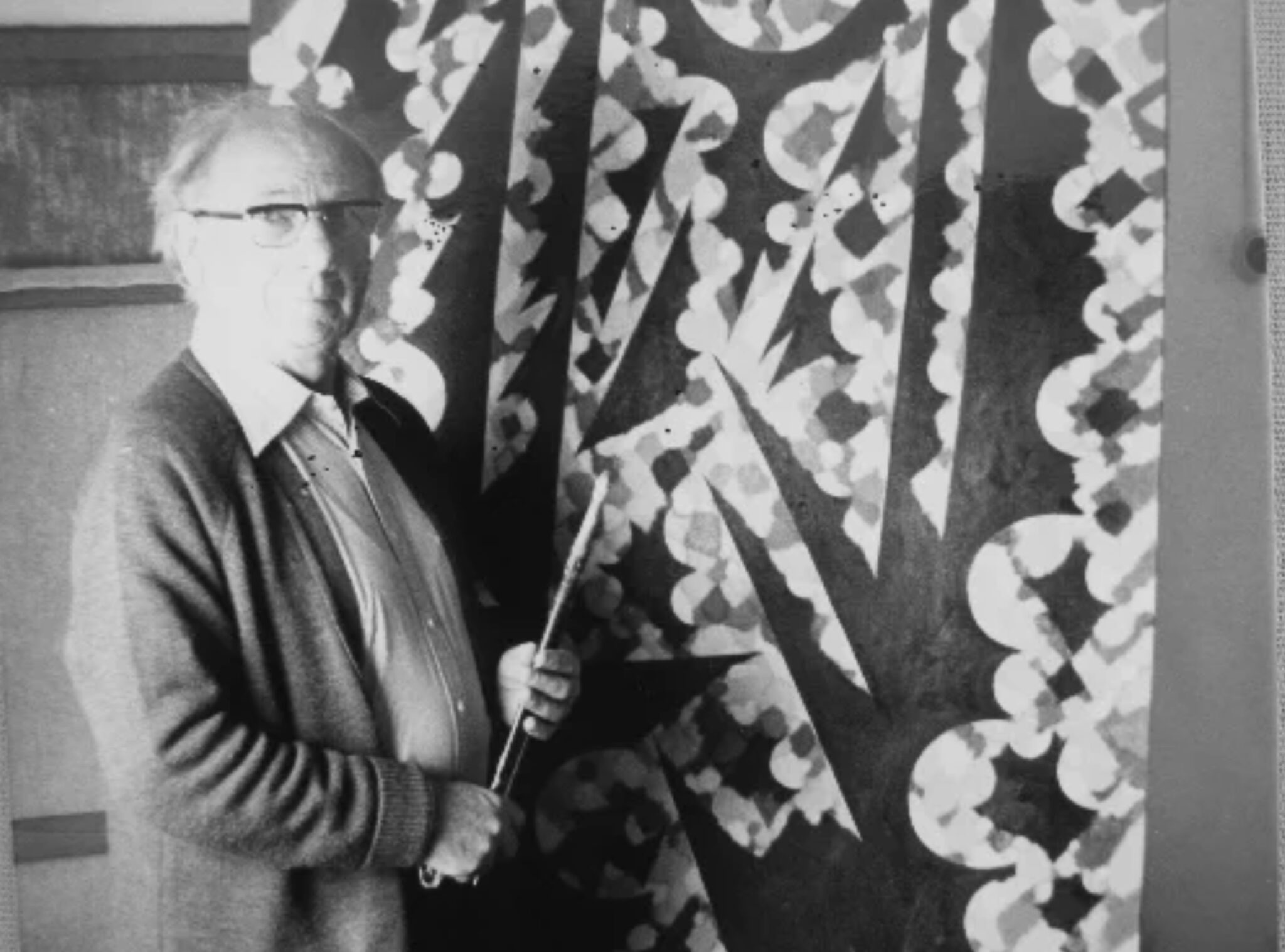
When discussing the people who shaped Birmingham’s postwar abstract atmosphere, it is impossible to overlook William Gear and Terry Frost. They embodied two completely different ways of experiencing reality: one was nervous, explosive, and almost chaotic—on the one hand—and the other was structured, geometric, and balanced—on the other.
In short, one seemed to be trying to depict the world after the catastrophe, while the other sought to carefully piece it back together using colored circles and clean lines. William Gear was born in the Scottish town of Methil—a place so industrial that abstractionism there likely arose in the air along with the dust from the shipyards. Gear was fascinated by the European avant-garde, Expressionism, and postwar continental experiments.
To the conservative British art world of the time, he appeared to be a figure of “dangerous” European influence, as he was associated with the CoBrA group—a radical movement that opposed academic conservatism and “proper” painting. When Geer later became head of the department at Birmingham College of Art, he brought a completely different aesthetic there: bold colors, angular forms, and the almost physical energy of the canvas. His abstraction did not attempt to be decorative. On the contrary, it appeared as a sharp visual reaction to a world of ruin and historical instability.
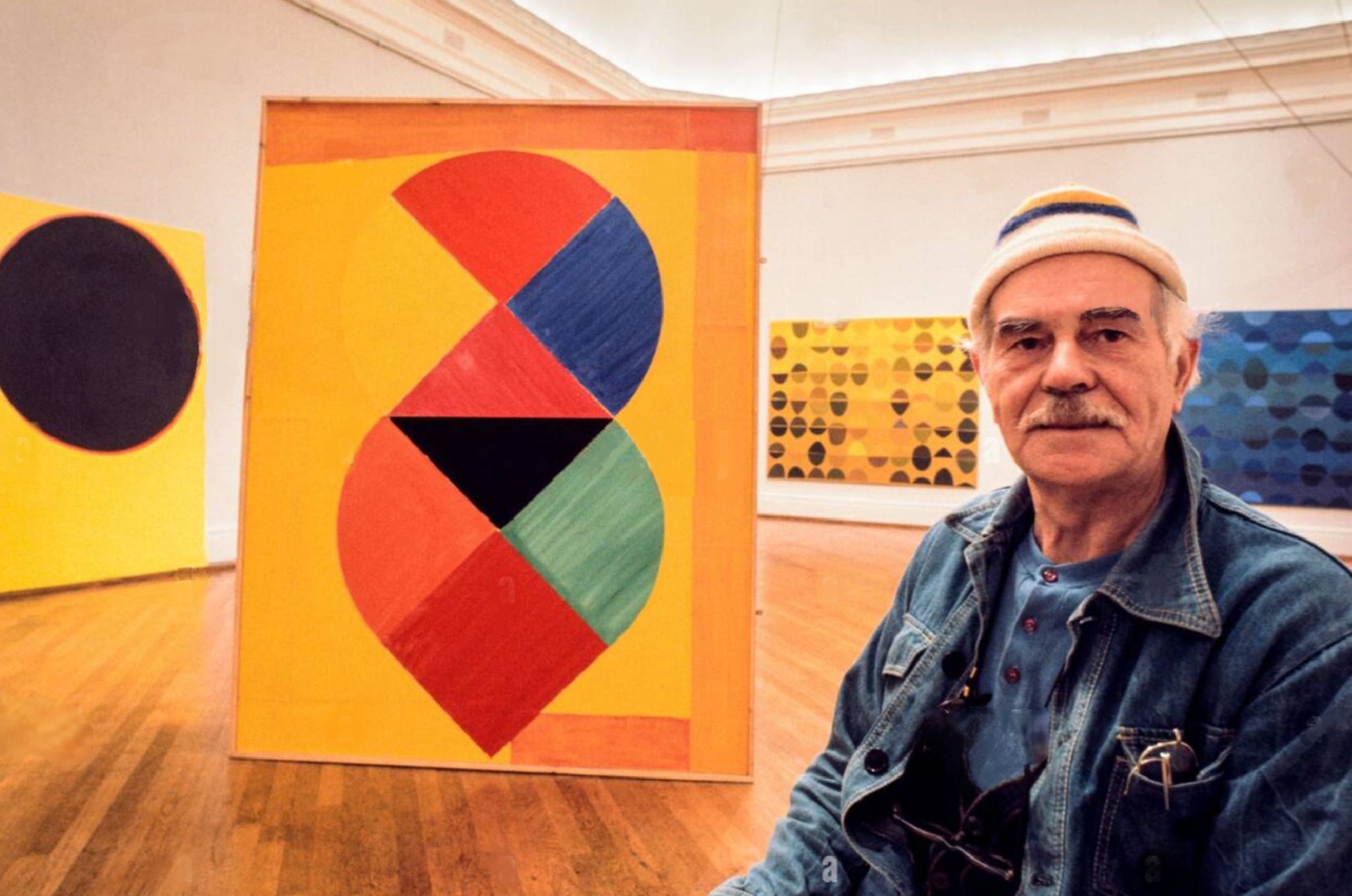
Against this backdrop, Terry Frost seemed like the complete opposite. He was born in the resort town of Leamington Spa, and his path to art was shaped by very harsh life experiences, not academic salons. During World War II, Frost was taken prisoner, and it was in the camp that he developed a serious interest in drawing. It sounds like the plot of an arthouse film, but it was precisely after this experience that he seriously immersed himself in art and began to study painting professionally.
While Gira’s works seemed to be the result of a nervous outburst, Frost worked with rhythm and planes of color in a much calmer manner. His large, circular forms created a sense of order, as if art were trying to pull itself back together. Frost’s abstraction sought to convince the viewer: the world can still be organized—if not politically, then at least compositionally.
It was precisely this unusual yet quintessentially postwar Birmingham combination—the continental expression of William Gear and the restrained geometric harmony of Terry Frost—that ultimately shaped the distinctive atmosphere of the Midlands art scene. Here, abstractionism finally shed its status as a purely metropolitan experiment. It became a living, organic manifesto of a city that was rebuilding its identity amid concrete and factory noise.
It’s not just about painting
However, the postwar avant-garde in Birmingham wasn’t limited to just painting. The city quickly began experimenting with literally everything within reach of modernists, designers, and people who clearly found postwar reality too mundane.
Abstract aesthetics found its way into experimental theater, modernist photography, advertising, and even typeface design, where strict geometry and functionality suddenly became the new religion of the urban era.
It is worth mentioning the early sound experiments and mechanical rhythms that created the cultural environment from which British electronic and industrial culture later emerged. In Birmingham, the noise of sound generators and tape recorders resonated particularly naturally. The city of metal, factory clatter, and concrete interchanges seemed to push artists toward synthetic sound and a cold, technogenic aesthetic.
At one point, it seemed as though postwar Birmingham had decided to transform its own industrial anxiety into a unique artistic style. And, ironically enough, it worked: the city became one of the British centers of that very “modernist nervousness,” without which it is difficult today to imagine the culture of the second half of the 20th century.
From a regional experiment to a global standard
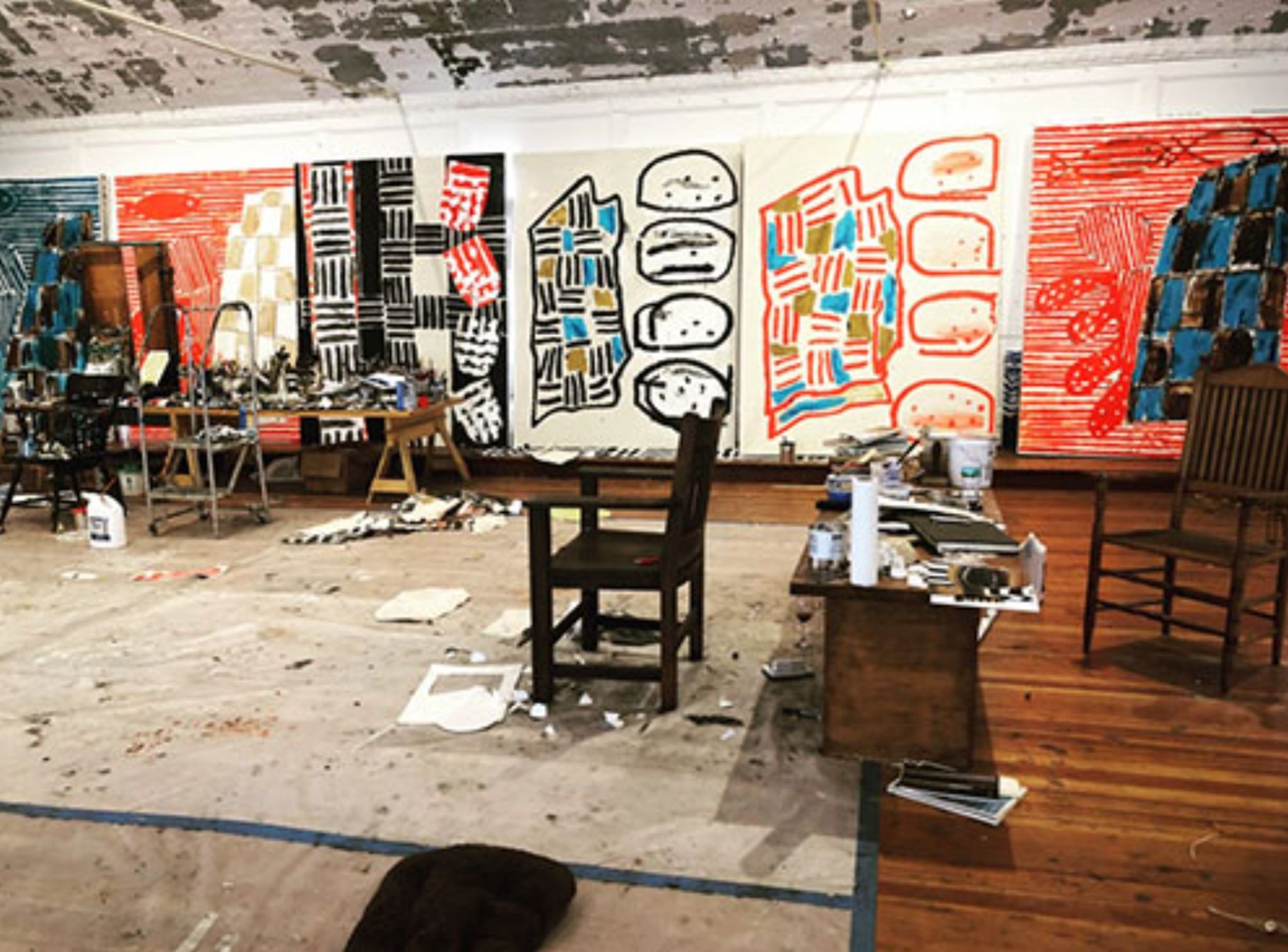
Today, it is hard to deny that postwar Birmingham gave British art a constellation of iconic artists—from William Gear to John Walker—whose works have long transcended the local scene. Once upon a time, Midlands abstraction seemed merely a provincial “addition” to the London scene, where far more attention was paid to Sandra Blow or Gillian Ayres.
However, time has shown that Birmingham has developed its own unique artistic language—harsh, industrial, edgy, and yet completely distinctive. Interestingly, this industrial style is currently experiencing a true renaissance. A new wave of interest in radical postwar modernism is returning to the focus of art critics, and this momentum is once again coming from Birmingham.
Sources:
- https://www.birmingham.ac.uk/research/projects/midlands-art-papers/issue-one/searching-for-pure-form-terry-frost-madrigal-1949
- https://birminghamcivicsociety.org.uk/blue-plaque-william-gear/
- https://www.tate.org.uk/whats-on/tate-britain/turner-prize-1985/turner-prize-1985-artists-john-walker
- https://johnwalkerpainter.com/bio.php